Search Results for: Herbivores

Types of species

Species can be classified in many different ways. One species classification system may categorise species into Typological, evolutionary, and phylogenetic species.

Read Article

Disruption of Food-chains and Genetic Erosion

The population explosions of earlier and present days have already caused and are still causing serious impacts on the global environment. As for the biological environment, the human population has stressed most biological systems, comprising flora and fauna, as well as biological diversity.

Read Article

Transfer of Food through Ecosystems

All biosphere ecosystems have well-organized functions, such as cycling nutrients through food chains, operating biogeochemical cycles, and maintaining the energy flow received by green plants through solar radiation.

Read Article

Positive and Negative Interdependence among Organisms in Ecosystems

Interdependence between two species through which individuals of either one or both species benefit is called positive interdependence. The benefits to the individual of any species through this relationship may be continuous or transitory, obligate or facultative. Both partners in this type of relationship may be in close contact; one may be inside some specific area or attached to the surface of the other’s body. Positive interdependence is divided into three major types: mutualism, Commensalism, and proto-cooperation.

Read Article

Types of Ecosystems – Terrestrial and Aquatic

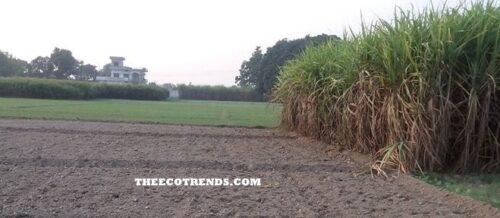
Ecosystems can be categorised into two broad categories: natural and artificial. Natural Ecosystems are those ecosystems that operate by themselves under natural conditions. These ecosystems are further categorized as Terrestrial and Aquatic Ecosystems. Terrestrial ecosystems relate to lands, whereas Aquatic ecosystems relate to fresh or marine water. Freshwater ecosystems may be Lotic or Lentic. Lotic are running water ecosystems like springs, streams or rivers, whereas Lentic Fresh Water Ecosystems may be found in standing waters of lakes, ponds, pools, puddles, ditches, swamps, etc. Marine Ecosystems are found in marine waters of salt lakes, seas, oceans and estuaries. Artificial Ecosystems are man-engineered ecosystems like crop fields, artificial ponds and lakes, aquaria, fish ponds, and abandoned mines reclaimed as lakes or water bodies for recreation.

Read Article

Man, and Animals

Humans have a complex relationship with animals and use them for a variety of purposes. There are working animals, companion animals, animals used for scientific research, and animals used for food and by-products.

Read Article

Human Attitudes to Animals

Humans have a complex relationship with animals. They use them for a variety of purposes. There are working animals, companion animals, animals used for scientific research, and animals used for food and byproducts.

Read Article