Macro and Micro Ecosystems and Relation among Organisms
A habitat is the natural home or environment of an animal, plant, or other organism.
A habitat is the natural home or environment of an animal, plant, or other organism.
Coarse grains are broadly discussed these days. Now the world has come to know about their importance. Coarse grains have been contained in the Indian dishes since long. Now that the harmful effects of soft grains are known, the world has come to advocate the coarse grains.
Brain and Spinal cord together constitute the Nervous System. The nervous system receives information in the form of impulses from all parts of the body and integrates this information.
Studies and researches that are done in different fields from time to time show increasing complexities in organisms than their ancestors. These studies and evidences show many important evidences of organic evolution.
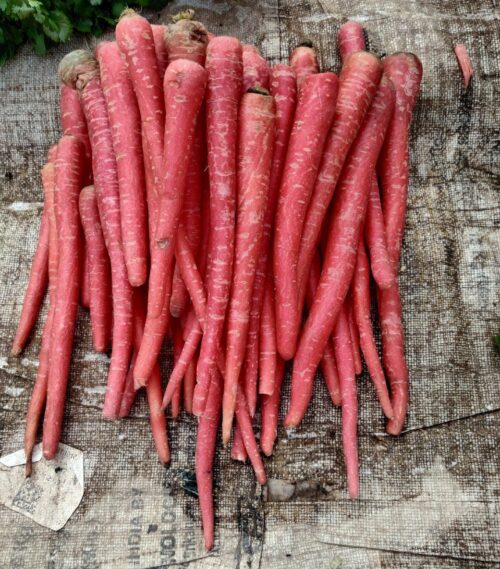
The carrot which is taxonomically known as Daucus Curota sub species sativus is an important plant. It is typically orange or blood red in colour. However, it is found in many colours like white, red, yellow etc. All of these are domesticated forms of the wild carrot.
An area or structure that protects animals from adverse conditions is called an animal shelter. Different kinds of animals need different types of shelters. Different kinds of animals and their shelters are mentioned here.
Kinds of animals and their shelters
Animals can be classified into terrestrial, arboreal, aquatic and amphibians.
Terrestrial Animals
Land animals are called as terrestrial animals. Some of these animals like lion, tiger, bears and bats live in rock caves. Illustration
Snakes live in ground, under rocks and in abandoned ant hills. Some snakes live insid
The balloon vine is an interesting plant of India which is also called as Love in a Puff, the heart pea, the heart seed etc. Botanically, it is called as Cardiospermum halicacabum .This plant belongs to the taxonomic family Sapindaceae or the Soapberry family.
When both the ovaries are fully mature, they alternatively produce ova at the interval of 28 days. Release of ovum into the uterus through the fallopian tube is called as ovulation.
There are more than 10,000 species of reptiles. This day helps us understand vast types of their species and their habitats. This day also provides us knowledge about benefits that we get from the world of reptiles.
Vast variability exists in the distribution or occurrence of different life forms in different habitats. The variability of life forms in a particular habitat is considered as the biodiversity of that habitat.
Non-renewable resources coal and petroleum are energy sources that we use and consume faster than the rate of their production in nature.