2024

Advertisement
December 30, 2024

Land Management- Principles and Key Components

With the growth of human population, more and more land was cleared for cultivation, housing and cattle rearing. Later, as towns and cities started developing, vast areas of land were started to be consumed in making roads, rail tracks, bridges, buildings, markets, trade centres, Educational and Research Centres, hospitals, railway junctions, etc.

Read Article
December 29, 2024

Land Management, Its Needs and Principles

Land management is the process of managing the use and development of land resources in rural and urban areas. Land resources are used for a variety of purposes which may include organic agriculture, reforestation, water resource management and eco-tourism projects.

Read Article
December 28, 2024

Land Pollution -Sources and Prevention

Some environmentalists define land pollution as – build up of toxic chemical compounds, salts, pathogens or radioactive materials in soil that can affect plant and animal life adversely, is called as soil pollution.

Read Article
December 25, 2024

Joint Forest Management (JFM) and National Scenario

The concept of joint forest management was initiated on a large scale through guidelines issued by the government of India in 1990. According to those guidelines the village communities are to be involved in the development and protection of degraded forests based on taking their genuine share of benefits from those forests.

Read Article
December 24, 2024

Conservation and Management of Forest

A forest is a highly complex and constantly changing environment. It is made up of a variety of living things like wildlife, trees, shrubs, wildflowers, ferns, mosses, lichens, fungi and microscopic soil organisms; and non-living things such as water, nutrients, rocks, sunlight and air. Trees are the biggest part of this complex community.

Read Article
December 23, 2024

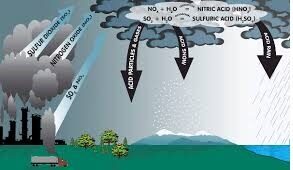
Major atmospheric pollutants

Substances that cause pollution of air are called as air- pollutants or atmospheric pollutants. These are fine Primary Pollutants that contribute more than 90 percent of global air pollution. These fine pollutants are carbon monoxide (CO); Nitrogen oxides (NOx); Sulphur oxides (Sox) and particulates. These pollutants can be put into two broad categories A. Gaseous Pollutants, and B. Particulates.

Read Article
November 25, 2024

Pollution and its various Types

Our natural resources are known to have some specific qualities of their own. These qualities are known as natural qualities. It is due to specific natural qualities that different natural resources have been useful to us and to the whole biosphere. But now, the condition has changed considerably.

Read Article
April 5, 2021 Recommended

On the World Autism Day …

April 2 every year is celebrated as the World Autism Day. The aim of the celebration of this day is to create Awareness among parents about this problem with their children.

Read Article
Advertisement
Gallery Picture
Gallery Picture
Gallery Picture
Gallery Picture
Gallery Picture
Gallery Picture
Gallery Picture
Gallery Picture
Gallery Picture
Gallery Picture
Gallery Picture
Gallery Picture
Gallery Picture
Gallery Picture
Gallery Picture
Gallery Picture
Gallery Picture
Gallery Picture