
Technological Development
The application of scientific knowledge for practical purposes, especially in industry, is called as technology.
The application of scientific knowledge for practical purposes, especially in industry, is called as technology.
Land management is the process of managing the use and development of land resources in rural and urban areas.
The Social Dimensions of environment incorporate – Demographic Pattern, Life styles of people, Human Health and Habitat, and Social Interactions…
In India, a Hazardous Substances Management Division has been constituted as a nodal point within the Ministry of Environment and Forest. This nodal agency is responsible for Planning, over-seeing and implementing the policies and programmes on management of hazardous substances and Chemical Emergencies.
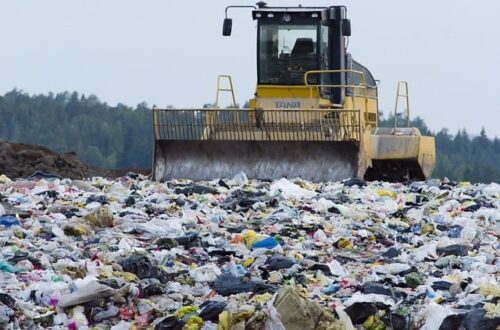
Land-filling is the process of disposing solid waste in low lands or into trenches through proper sanitary methods. It involves- collection, transport, compaction, etc. processes along with proper management for gas-outlet etc. For land filling, the important thing to be taken into account is the distance of waste collection site to the waste dumping site, because it involves cost of transportation.
Anything from which we can derive energy is called as a source of energy. Since all the life processes need energy, energy is most important for our survival.
Our body derives energy from the food we eat. Thus, the food we eat is the source of energy for our body. But this is not the whole story. We need energy for our growth and economic development as well.
The application of scientific knowledge for practical purposes, especially in industry, is called as technology.
Producers in running or Lotic type of ecosystem comprise species of algae, and plants that grow on embankments. Various varieties of molluscs, tadpoles, and insects are primary consumers whereas fish, crabs, and crustaceans are secondary consumers of this ecosystem. Numerous species of bacteria and few species of fungi act as decomposers in this ecosystem.
A forest is a highly complex and constantly changing environment. It is made up of a variety of living things like wildlife, trees, shrubs, wildflowers, ferns, mosses, lichens, fungi and microscopic soil organisms; and non-living things such as water, nutrients, rocks, sunlight and air. Trees are the biggest part of this complex community.
The gap between the rich and the poor has increased due to population growth. The rich people are exploiting more resources than poor people. Malnutrition is one of the most common effects of these problems. The poorest people in developing countries do not get adequate calories to develop their health properly.
The balance of nature is maintained by its different components -living and non-living, if they remain unaltered by human beings.
The scientists of Punjab Agricultural University (PAU), Ludhiana worked for ten years to develop a new High Yielding Variety of onion entitled POH-1.