
Causes and Impacts of Genetic Erosion
In the modern age of industrialization and competition for development, the human race has badly missed its traditions up to major extents and cultures- up to some extent.
In the modern age of industrialization and competition for development, the human race has badly missed its traditions up to major extents and cultures- up to some extent.
The population explosions of earlier and present days have already caused and are still causing serious impacts on the global environment. As for the biological environment, the human population has stressed most biological systems, comprising flora and fauna, as well as biological diversity.
Interdependence between two species through which individuals of either one or both species benefit is called positive interdependence. The benefits to the individual of any species through this relationship may be continuous or transitory, obligate or facultative. Both partners in this type of relationship may be in close contact; one may be inside some specific area or attached to the surface of the other’s body. Positive interdependence is divided into three major types: mutualism, Commensalism, and proto-cooperation.
The processes of development through years have spurred on unplanned urbanization, extensive industrialization followed by different types of pollutions, construction of a series of mega dams, and large-scale application of Agro-chemicals.
Ozone absorbs ultraviolet radiations so that much of it is never allowed to reach to the earth surface. The protective umbrella of ozone layer in the stratosphere protects the earth from harmful ultraviolet radiations. Ozone plays an important role in the biology and climatology on the earth’s environment. It filters out all the radiations that remain below 3000Å. Radiations below this wavelength are biologically harmful. Hence any depletion of ozone layer is sure to exert catastrophic impacts on life in the biosphere.
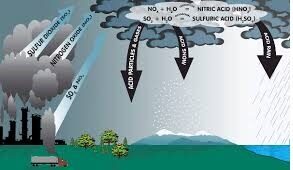
The acid rain affects living and non- living components of environment. In July 1982, Stockholm- the venue of U N –conference on acid rain, suffered heavy acid showers for about a week. In India too, acid rains have been reported since last twenty years in areas where thermal power plants are located and also around Delhi, the capital of India.
Our environment today is facing a number of problems. All those problems are causing dangers to take shape against the existence of the whole biosphere of this planet. But who is behind all those problems? The answer is – M A N.
We have been hearing about environmental pollution, loss of biodiversity, energy crisis, and the sustainable environment since long. So many things have already been infused in school syllabi as well. But how many of us really apply in our real life the things about which we have read in our classes?
Different activities may generate waste which may be solid or liquid. The quality of both solid and liquid wastes is increasing and if the wastes are disposed in an uncontrolled manner these may cause adverse impact on public health and environment. Hence these wastes need to be managed efficiently so as to safeguard public health and environment. In definitional terms, solid and liquid waste management is the collection, transportation, processing, recycling, treatment and disposal of waste materials.
The application of scientific knowledge for practical purposes, especially in industry, is called as technology.