
Management of Natural Resources
Ever since the earth was inhabited, humans and other life forms have depended on things that exist freely in nature…
Ever since the earth was inhabited, humans and other life forms have depended on things that exist freely in nature…
Waste too is found in three states- solids, liquids and gases. Liquid wastes such as different types of chemicals, useless medicines, detergents, pesticides, oil, automobile wastes etc. spread on the soil surface and make it poisoned. Decomposition and burning of things on ground produce different gases that pollute the air.
Growth of human population, fast but unplanned industrialization and irresponsible behavior to environment are causing imbalances in the local, regional, national and global environment. These are causing not only local but global problems in the environment.
Integrated Pest Management (IPM) in India: Features, Benefits, and Sustainable Agriculture Practices The promotion of Integrated Pest Management (IPM) in…
Modernization of Indian Agriculture and Its Environmental Impact With the advent of modernization in Indian agriculture, many changes were brought…
The concept of joint forest management was initiated on a large scale through guidelines issued by the government of India in 1990. According to those guidelines the village communities are to be involved in the development and protection of degraded forests based on taking their genuine share of benefits from those forests.
Species become endangered due to both natural and anthropogenic causes. Since man has no control over natural causes, we should consider anthropogenic causes only. Anthropological causes may be classified into two fundamental categories: Direct Causes and Indirect or underlying causes.
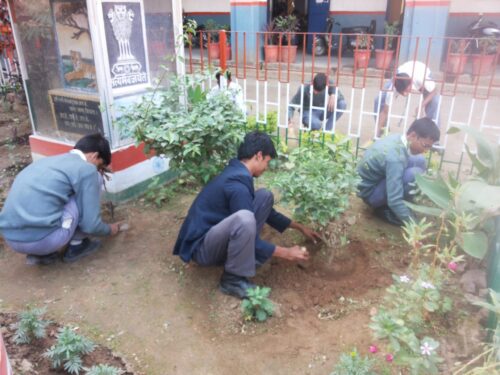
The conservation of the environment implies the sustainable use and management of natural resources, including wildlife, water, air, and earth soils.
It usually focuses on human needs and interests, which include the biological, economic, cultural, and recreational values of the natural environment.
Conservation of the environment implies the sustainable use and management of natural resources, including wildlife, water, air, and soils.
Interdependence between two species through which individuals of either one or both species benefit is called positive interdependence. The benefits to the individual of any species through this relationship may be continuous or transitory, obligate or facultative. Both partners in this type of relationship may be in close contact; one may be inside some specific area or attached to the surface of the other’s body. Positive interdependence is divided into three major types: mutualism, Commensalism, and proto-cooperation.