
Soil- its Conservation and Management
Soil is the loose material that covers the land surface of the earth, supports the growth of plants and acts as a habitat for numerous organisms.
Soil is the loose material that covers the land surface of the earth, supports the growth of plants and acts as a habitat for numerous organisms.
Our natural resources are known to have some specific qualities of their own. These qualities are known as natural qualities. It is due to specific natural qualities that different natural resources have been useful to us and to the whole biosphere. But now, the condition has changed considerably. Most of our natural resources like air, water and soil have gone bad due to pollution of different types. What is pollution?
Deforestation contributes up to 20 percent of greenhouse gas emission which is more than the combined emission by all the cars, trucks, planes, boats and, trains of the world. Deforestation threatens our climate. Besides this, it threatens the livelihoods of 1.6 billion people who depend on forests for food and economic activities. They serve as habitats to rare and so far, undiscovered species of plants and animals. They also play a key role in maintaining water cycles and preventing floods and soil erosion. Hence, forests across the world need urgent measure of protection by all possible ways, may it be through alternatives to deforestation.
The biosphere is itself a vast ecosystem which incorporates all the small ecosystems. But, the biosphere may have different types of physical conditions, communities of plants and animals, and climatic conditions in its different zones.
Different activities may generate waste which may be solid or liquid. The quality of both solid and liquid wastes is increasing and if the wastes are disposed in an uncontrolled manner these may cause adverse impact on public health and environment. Hence these wastes need to be managed efficiently so as to safeguard public health and environment. In definitional terms, solid and liquid waste management is the collection, transportation, processing, recycling, treatment and disposal of waste materials.
Anything from which we can derive energy is called as a source of energy. Since all the life processes need energy, energy is most important for our survival.
Our body derives energy from the food we eat. Thus, the food we eat is the source of energy for our body. But this is not the whole story. We need energy for our growth and economic development as well.
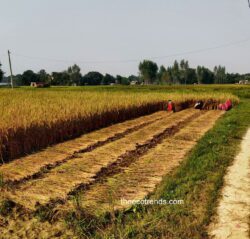
By this first week of December, paddy is coming home from fields in most of the states of India. In spite of claims of Government’s preparations on ground levels are still incomplete. Agencies have been reported to interfere in the process. They are pretending that they are unwilling to purchase rice due to more than 17% moisture in grains
The Makar Sankranti, the festival of Sun Worship and the festival of harvest is usually celebrated on 14th or 15th of January every year. This year, it is going to be celebrated on the 14th January 2021.
Dictionary defines the term Niche as a comfortable or suitable position in life of a living being, or a role taken by a type of organism within its community.
Ever since the earth was inhabited, humans and other life forms have depended on things that exist freely in nature…
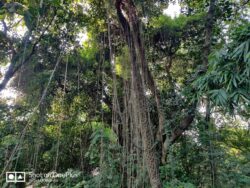
A forest is a highly complex and constantly changing environment. It is made up of a variety of living things like wildlife, trees, shrubs, wildflowers, ferns, mosses, lichens, fungi and microscopic soil organisms; and non-living things such as water, nutrients, rocks, sunlight and air. Trees are the biggest part of this complex community.