
Selling Mahaviree Flags in Corona offschool
The second corona outbreak has filled the society with terror.
The second corona outbreak has filled the society with terror.
Species become endangered due to both natural and anthropogenic causes. Since man has no control over natural causes, we should consider anthropogenic causes only. Anthropological causes may be classified into two fundamental categories: Direct Causes and Indirect or underlying causes.
Vast variability exists in the distribution or occurrence of different life forms in different habitats. The variability of life forms in a particular habitat is considered as the biodiversity of that habitat.
Ocean is a vast natural resource of water. These have also been examined in the search for alternate sources of energy-generation. For example, gravitational pull, by sun and moon causes tides, in which sea level rises and falls, two times in 24 hours. When it rises, sea water may be diverted through suitable channels, to inshore reservoirs driving the turbines, during its entry.
A population is a group of individuals (all members of a single species) who live together in the same habitat and are likely to interbreed. Each population has a unique physical distribution in time and space. It may contain individuals of different ages, and its size (density) is likely to change over time. It grows or shrinks according to the reproductive success of its members.
Most of the animals have a network of very fine filamentous or threadlike structures which exchanges information. These structures are called as nerves.
The application of scientific knowledge for practical purposes, especially in industry, is called as technology.
Introduction In the era of the fourth industrial revolution where environmental degradation, economic inequality and social unrest are rampant, the…
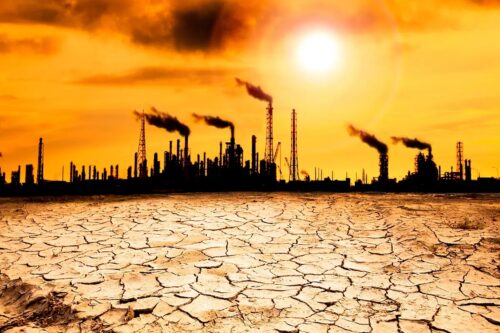
The processes of development through years have spurred on unplanned urbanization, extensive industrialization followed by different types of pollutions, construction of a series of mega dams, and large-scale application of Agro-chemicals. In the process, different parts of the world have started facing ecological crises.
The Industrial Policy Initiative undertaken by the Central Government in July 1991, made the Indian Industry to compete on International Levels. As a result, an Industrial Licensing Policy was adopted in 1991. It was followed by a number of steps like Liberalization of Foreign Investment in Banking Sector, Technological Collaboration with other countries, Creation of Special Economic Zones and, Simplification of Industrial Licensing and Promotion of Exports etc.
It is said that corporations can destroy the world’s intact forests. They have also the Power to help save them. They can make an impact by introducing zero- deforestation policies. These policies require suppliers to produce commodities such as timber, beef, palm oil, and fibres for paper in such a way that has a minimal impact on natural forests and climate. These can also introduce paper procurement policies that set ambitious targets to maximise the use of post-consumer recycled wood, pulp, paper and fibre in their products and ensure that any virgin fibre used is certified by a rigorous third-party certification system.