
Our Central and Peripheral Nervous Systems
Brain and Spinal cord together constitute the Nervous System. The nervous system receives information in the form of impulses from all parts of the body and integrates this information.
Brain and Spinal cord together constitute the Nervous System. The nervous system receives information in the form of impulses from all parts of the body and integrates this information.
Most of the animals have a network of very fine filamentous or threadlike structures which exchanges information. These structures are called as nerves.
Energy is essential for working and survival of all the organisms on this planet. In fact, it is the energy which enables organisms to perform their biological functions.
More than half of the population of the world comprises farmers. These farmers know that maintaining and conserving natural resources are very important to sustain their lives. However, the demand of more and more food due to the exploding population and higher expectations for comfort and wealth enforces these farmers to exploit more and more of the natural resources through the application of modern technology. The agriculture based on the latest farm machinery, hybrid and high-yielding crop varieties and agrochemicals is called as modern agriculture. Under the changing trends of modern agriculture, the difficult situation of maintaining and conserving natural resources is being faced the world over in the agriculture sector.
When both the ovaries are fully mature, they alternatively produce ova at the interval of 28 days. Release of ovum into the uterus through the fallopian tube is called as ovulation.
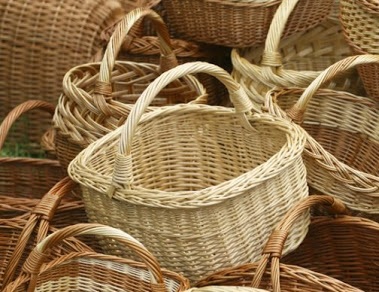
India has a vibrant tradition of crafts. Though agriculture employs largest number of people in this country, craft section employs and sustains over twenty million people.
Introduction to Nuclear Family A nuclear family is a small family unit consisting of parents and their children. In modern…
Human activities have never been friendly to environment. The remains of Mohenjo-Daro and Harappa signify that the civilization ended due to desertification which might had been caused by large scale deforestation. Still today impacts of such human activities have started appearing. Hence it is essential that we manage our natural resources properly.
The bread of maize and vegetable of mustard leaves during winter are popular food items. Their popularity originates basically from the Punjab state of India.
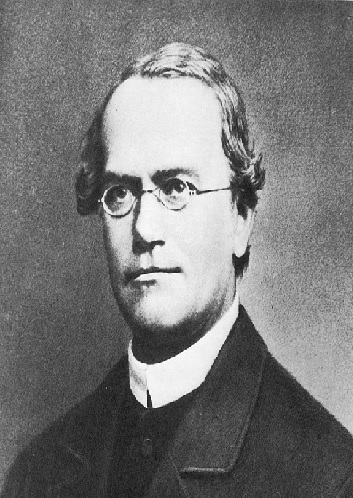
On the basis of his experiments of hybridization Mendel proposed following rules of heredity-1. Law of dominance, 2. Law of iseggregation and , 3.Law of Independent Assortment.
The total area where living beings are found is called as biosphere. It can be divided into many small independent units called as Ecosystem. In fact, the unit of biosphere which incorporates many types of microorganisms, plants and animals, physical factors like soil, water, air etc. interacting among themselves is called as ecosystem
The first Dahlia flower in winter of the year was seen by me only today in my school garden. It looked so solitary, innocent and so beautiful that I could not resist the temptation of taking its photograph.