pollution control board

Advertisement
March 25, 2023

Hazardous Waste- Handling and Management    

In India, a Hazardous Substances Management Division has been constituted as a nodal point within the Ministry of Environment and Forest. This nodal agency is responsible for Planning, over-seeing and implementing the policies and programmes on management of hazardous substances and Chemical Emergencies.
Read Article
August 20, 2022 Recommended

Energy from Oceans- Tidal Energy, Wave Energy and Oceanic Thermal Energy

Ocean is a vast natural resource of water. These have also been examined in the search for alternate sources of energy-generation. For example, gravitational pull, by sun and moon causes tides, in which sea level rises and falls, two times in 24 hours. When it rises, sea water may be diverted through suitable channels, to inshore reservoirs driving the turbines, during its entry.

Read Article
February 19, 2021 Recommended

Spices are Necessary for Health

Eatable spices not only increase the taste and smell of food, they contain nutrients that increase our immunity and protect from any infection.

Read Article
September 28, 2024 Recommended

Types of Ecosystems – Terrestrial and Aquatic

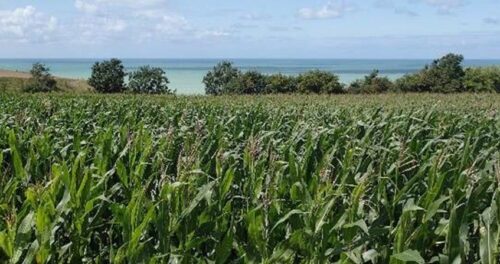
Ecosystems can be categorised into two broad categories: natural and artificial. Natural Ecosystems are those ecosystems that operate by themselves under natural conditions. These ecosystems are further categorized as Terrestrial and Aquatic Ecosystems. Terrestrial ecosystems relate to lands, whereas Aquatic ecosystems relate to fresh or marine water. Freshwater ecosystems may be Lotic or Lentic. Lotic are running water ecosystems like springs, streams or rivers, whereas Lentic Fresh Water Ecosystems may be found in standing waters of lakes, ponds, pools, puddles, ditches, swamps, etc. Marine Ecosystems are found in marine waters of salt lakes, seas, oceans and estuaries. Artificial Ecosystems are man-engineered ecosystems like crop fields, artificial ponds and lakes, aquaria, fish ponds, and abandoned mines reclaimed as lakes or water bodies for recreation.

Read Article
October 25, 2024 Recommended

Types of species

Species can be classified in many different ways. One species classification system may categorise species into Typological, evolutionary, and phylogenetic species.

Read Article
July 1, 2022 Recommended

Environmental Indicators that We Observe

Anthills show the quality of soil.

A substance, factor, change, living being or a system that quantifies and simplifies phenomena and helps in understanding complex realities, is called as indicator.

It tells us something about changes in a system. There are many types of indicators some of which are- Financial Indicators, Poverty Indicators, Health Indicators, Environmental Indicators, and Indicators of Sustainable Development.

Read Article
September 30, 2021 Recommended

Population Control

Through different means – natural and unnatural the process of keeping in a limit the growth of population is called as Population Control. It is essential for the welfare of human families. This is the reason why its name has been changed to the Family Welfare.

Read Article
September 20, 2022 Recommended

What Indians use cow dung cakes for?

Cattle dung has been used in India to sweep cutcha houses and to make cakes for burning in kitchens. One of the best uses of dung is for making compost etc. manure. Indians, especially Hindus use cow dung for making compost, dung cakes and for religious purposes.

Read Article
Advertisement
Gallery Picture
Gallery Picture
Gallery Picture
Gallery Picture
Gallery Picture
Gallery Picture
Gallery Picture
Gallery Picture
Gallery Picture
Gallery Picture
Gallery Picture
Gallery Picture
Gallery Picture
Gallery Picture
Gallery Picture
Gallery Picture
Gallery Picture
Gallery Picture
Gallery Picture
Gallery Picture
Gallery Picture