Habitat Destruction
Nearly half of the planet’s plant and animal species live in Rainforests. Less than 2.5 billion acres of Tropical Forest have remained out of four billion acres on the Earth within a few hundred years.
Nearly half of the planet’s plant and animal species live in Rainforests. Less than 2.5 billion acres of Tropical Forest have remained out of four billion acres on the Earth within a few hundred years.
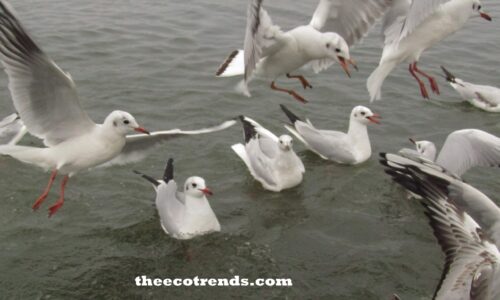
Discoveries and inventions have made human lives easy and comfortable. Men have stopped walking long distances. But his does not relate to flying of birds. They continue flying and flying for ages very high and up to amazingly long distances.
Non-renewable resources coal and petroleum are energy sources that we use and consume faster than the rate of their production in nature.
The food eaten by any one comprises many different components like – Carbohydrates, Proteins, fats, Minerals, and Vitamins and water. For humans and big animals water too has been accepted as a necessary component of food.
Determining male or female form of living organism through sexual reproduction is called as sex determination. Sex determination on a large scale is of two types- environmental, genetic and chromosome based.
Ecosystems can be categorised into two broad categories: natural and artificial. Natural Ecosystems are those ecosystems that operate by themselves under natural conditions. These ecosystems are further categorized as Terrestrial and Aquatic Ecosystems. Terrestrial ecosystems relate to lands, whereas Aquatic ecosystems relate to fresh or marine water. Freshwater ecosystems may be Lotic or Lentic. Lotic are running water ecosystems like springs, streams or rivers, whereas Lentic Fresh Water Ecosystems may be found in standing waters of lakes, ponds, pools, puddles, ditches, swamps, etc. Marine Ecosystems are found in marine waters of salt lakes, seas, oceans and estuaries. Artificial Ecosystems are man-engineered ecosystems like crop fields, artificial ponds and lakes, aquaria, fish ponds, and abandoned mines reclaimed as lakes or water bodies for recreation.
The dictionary meaning of a shelter is – something beneath, behind, or within which a person, animal or anything is protected from adverse conditions, and where it can reproduce is called as a shelter.
Vast variability exists in the distribution or occurrence of different life forms in different habitats. The variability of life forms in a particular habitat is considered as the biodiversity of that habitat.
Roots of plants too, respond to the changes in climate.
The Government of Jharkhand is preparing to add one more link in the chain of creating income source for farmers of the state.
The Makar Sankranti, the festival of Sun Worship and the festival of harvest is usually celebrated on 14th or 15th of January every year. This year, it is going to be celebrated on the 14th January 2021.
Forests and wildlife are integral part of environment. Forests control climate, soil erosion and wildlife. They cause rains.