Sustainable Development Goals and the Role of Education
Introduction In the era of the fourth industrial revolution where environmental degradation, economic inequality and social unrest are rampant, the…

Introduction In the era of the fourth industrial revolution where environmental degradation, economic inequality and social unrest are rampant, the…
A population is a group of individuals of a particular species occupying a particular area at a specific time.
Conservation of species in their natural habitats- in areas where they occur under normal conditions is called in-situ conservation.
This type of conservation strategy protects the entire area. Such an area is protected and maintained to conserve all the known or unknown species inhabiting it.
In this type of conservation, species are not isolated or provided with health care, food, or mating facilities. Only factors detrimental to species’ existence and development are eliminated in this conservation strategy. Human interference, such as hunting, cutting down trees, collecting firewood, etc., is completely banned in such areas.
Species become endangered due to both natural and anthropogenic causes. Since man has no control over natural causes, we should consider anthropogenic causes only. Anthropological causes may be classified into two fundamental categories: Direct Causes and Indirect or underlying causes.
Great diversities are found in terms of sexual reproduction among animals.
Sparrow or the House Sparrow taxonomically belongs to the family Passeridae. It is found in most parts of the world.
Darwin published his book “On the Origin of Species” on 24 November 1859. The aim of Darwin Day inspires to fulfil the academic curiosities. It demands to search the truth in scientific ways.
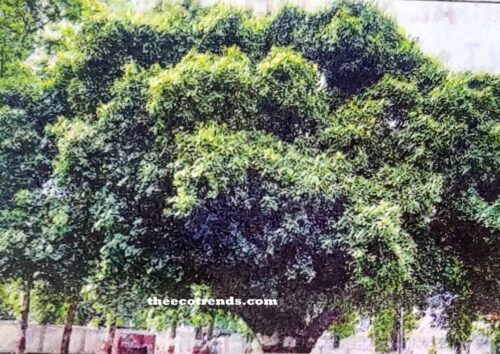
Pakad or Ficus virens is one significant tree of the Panchvati group. Panchvati is the group of five sacred or important trees worshipped and adorned in the Hindu culture since ancient time.
Some propagules or seeds incidentally travel long distances and reach to other county. There they germinate and produce new plants.
Well, I am going to talk about a tree waiting to be cut down for the sake of opening the fifteenth gate of a Stadium, or for the sake of urban development.
Natural resources constitute both living and non-living resources. Non-living resources are renewable and non-renewable.
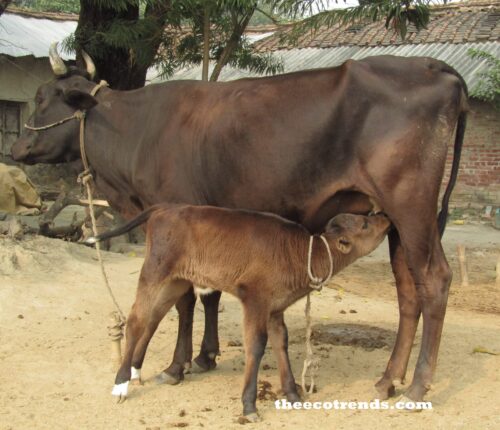
The term animal has its origin from the Latin word animalis which means one who has breath. This word is usually applied for the non-human members of the Kingdom Animalia in animal taxonomy. However, the closer relatives of humans like mammals (having mammary glands) have been included in this term.