
Integrated Pest Control and IPM Programme
Integrated Pest Management (IPM): Definition, History, Principles, and Implementation According to the Ministry of Agriculture, Department of Agriculture and Cooperation,…
Integrated Pest Management (IPM): Definition, History, Principles, and Implementation According to the Ministry of Agriculture, Department of Agriculture and Cooperation,…
Biotechnology in Agriculture: Applications, Techniques, and Benefits The scientific knowledge which is applied in practical ways in industry for the…
The growing human population and backwardness of agriculture remained the principal reasons behind the scarcity of food in India up…
Modernization of Indian Agriculture and Its Environmental Impact With the advent of modernization in Indian agriculture, many changes were brought…
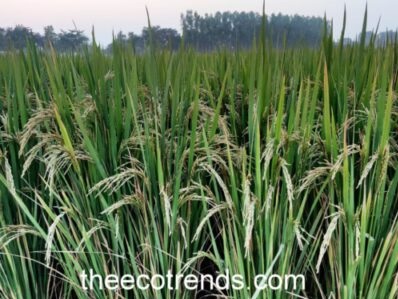
Growing a single crop species over a large area or farm is called intensive farming or monoculture. Earlier practices of mixed cropping caused problems in crop management, like harvesting, etc. Uniformity in plant height adds beauty to our fields and makes the application of agrochemicals easy. It also saves time and energy in segregating grains in threshing.
More than half of the population of the world comprises farmers. These farmers know that maintenance and conservation of natural resources are very important to sustain their livelihoods. However, the demand of more and more food due to exploding population and higher expectations for comfort and wealth forces these farmers to exploit more and more of the natural resources through the application of modern technology.
A Pesticide is a chemical substance of natural or synthetic origin. It is applied in different forms to kill pests. Pests are living organisms that tend to harm humans, their crops and animals or have a tendency to disturb general household and living conditions. Some organisms can also be applied to kill pests. These organisms are called as biopesticides. On the other hand, pesticides that are synthesized in factories are called as synthetic pesticides.
The process of recovering or reusing usable materials from discarded waste is called recycling. For example, about 15 per cent of Sulphuric acid is recycled in chemical manufacturing. In the early days, all the sulphur needed for the production of sulphuric acid was taken out of mines directly. But now, with the prevailing tendencies of recycling, sulphuric acid manufacturing industries are using sulphur from smelters, refineries, etc.
It is said that corporations can destroy the world’s intact forests. They have also the Power to help save them. They can make an impact by introducing zero- deforestation policies. These policies require suppliers to produce commodities such as timber, beef, palm oil, and fibres for paper in such a way that has a minimal impact on natural forests and climate. These can also introduce paper procurement policies that set ambitious targets to maximise the use of post-consumer recycled wood, pulp, paper and fibre in their products and ensure that any virgin fibre used is certified by a rigorous third-party certification system.
Land management is the process of managing the use and development of land resources in rural and urban areas. Land resources are used for a variety of purposes which may include organic agriculture, reforestation, water resource management and eco-tourism projects.
We have been hearing about environmental pollution, loss of biodiversity, energy crisis, and the sustainable environment since long. So many things have already been infused in school syllabi as well. But how many of us really apply in our real life the things about which we have read in our classes?
The population explosions of earlier and present days have already caused and are still causing serious impacts on the global environment. As for the biological environment, the human population has stressed most biological systems, comprising flora and fauna, as well as biological diversity.