Biology

Advertisement
September 25, 2022

Water Pollution- Sources and Control

Mixing of different solid, liquid or gaseous substances and microorganisms into water, so as to alter its natural qualities is called as water pollution. According to the National Water Commission (1973), water gets polluted if it has not been of sufficiently high quality to be suitable for the highest uses people wish to make of it at present or in future.
Read Article
September 21, 2022

Ant Colony and Bee Colony

Ant colonies are Eusocial which means living in a cooperative group in which usually one female and several males are reproductively active and the non-breeding individuals care for the young and protect the group. These are very much like those found in other social animals   though the various groups of these developed sociality independently through convergent evolution.

Read Article
August 20, 2022

Energy from Oceans- Tidal Energy, Wave Energy and Oceanic Thermal Energy

Ocean is a vast natural resource of water. These have also been examined in the search for alternate sources of energy-generation. For example, gravitational pull, by sun and moon causes tides, in which sea level rises and falls, two times in 24 hours. When it rises, sea water may be diverted through suitable channels, to inshore reservoirs driving the turbines, during its entry.

Read Article
August 15, 2022

Biogas and Biogas Plant

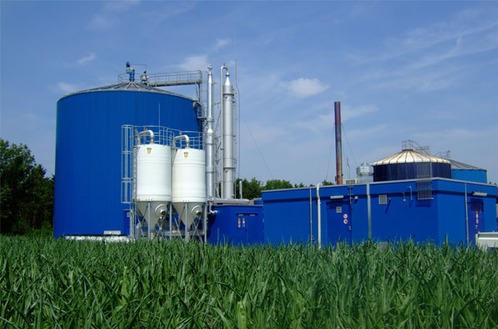
Biogas is a mixture of 56% methane gas (CH4), 40% carbon dioxide (C02) and rest, a mixture of H2, H2S and N2. It is produced by digestion, Pyrolysis and hydro gasification in a specific plant called as Biogas Plant. Biogas plants are of various types like — Janata biogas plant, Dean Bandhu biogas plant, Khadi and Village Industries Corporation (KVIC) type biogas plant, Pragati Design biogas plant and Chinese biogas plant.

Read Article
August 15, 2022

Biomass Energy and its implications

The dry weight of organic matter produced by plants, their derivatives and wastes are called as BIOMASS. The biomass includes crop residues, plant parts, body parts of dead animals and animal wastes. As biomass is created due to photosynthesis by plants, so energy from biomass or bio wastes is regarded as another form of solar energy.

Read Article
May 8, 2022

Management and Types of Natural Resources

Ever since the earth was inhabited, humans and other life forms have depended on things that exist freely in nature to survive. These things include water (seas and fresh water), land, soils, rocks, forests (vegetation), animals (including fish), fossil fuels and minerals. They are called Natural Resources and are the basis of life on earth.

Read Article
October 28, 2024 Recommended

Direct causes of the loss of biodiversity

Species become endangered due to both natural and anthropogenic causes. Since man has no control over natural causes, we should consider anthropogenic causes only. Anthropological causes may be classified into two fundamental categories: Direct Causes and Indirect or underlying causes.

Read Article
August 19, 2022 Recommended

Hunger, Famine, and Nutritional Deficiency Diseases

People who suffer from hunger remain undernourished. They don’t get enough food to eat. As such they don’t get energy, they need to live active lives. Undernourished persons remain unable to study, work or otherwise perform physical and mental activities. This condition is especially hard for women and children. Continuous hunger weakens the immune system and makes them vulnerable to diseases and infections. Mothers who suffer continuous hunger often give birth to underweight and weak babies, and they face increased risk of death.

Read Article
Advertisement
Gallery Picture
Gallery Picture
Gallery Picture
Gallery Picture
Gallery Picture
Gallery Picture
Gallery Picture
Gallery Picture
Gallery Picture
Gallery Picture
Gallery Picture
Gallery Picture
Gallery Picture
Gallery Picture
Gallery Picture
Gallery Picture
Gallery Picture
Gallery Picture
Gallery Picture
Gallery Picture
Gallery Picture