What is the interaction between members of the same species?
Living beings interact with each other, with members of other species, and with components of the abiotic environment in an…
Living beings interact with each other, with members of other species, and with components of the abiotic environment in an…
The concept of joint forest management was initiated on a large scale through guidelines issued by the government of India in 1990. According to those guidelines the village communities are to be involved in the development and protection of degraded forests based on taking their genuine share of benefits from those forests.
Most of the ponds and lakes are drying up. The ground water level is falling down. As such the city is moving to grave water crisis.
Through different means – natural and unnatural the process of keeping in a limit the growth of population is called as Population Control. It is essential for the welfare of human families. This is the reason why its name has been changed to the Family Welfare.
The State Pollution Control Board, Jharkhand has passed an order for cattle rearing people not to keep more than nine cattle with them without its written permission.
Most of the animals have a network of very fine filamentous or threadlike structures which exchanges information. These structures are called as nerves.
The South West Monsoon is ready to go in a delayed manner. It is returning late continuously since last three years.
Auxins move to darker side of the part of a plant and cause cells of that side to grow larger. These may induce cell division as well. In both of these cases the part of the plant bends.
The environment of our earth has a number of life zones that support birth and development of all types of organisms.
All the life zones of the earth are collectively called as Biosphere.
The biosphere vertically extends into the atmosphere up to about 10 km and downwards into the oceans up to a depth of about6.9 km.
Growing a single crop species over a large area or farm is called intensive farming or monoculture. Earlier practices of mixed cropping caused problems in crop management, like harvesting, etc. Uniformity in plant height adds beauty to our fields and makes the application of agrochemicals easy. It also saves time and energy in segregating grains in threshing.
Tourists coming to Bihar will have to stay at nights in villages located near tourist spots.The villages located nearby tourist spots are to be developed like guest houses under the Pilot Project of the Bihar Tourism Development Corporation.
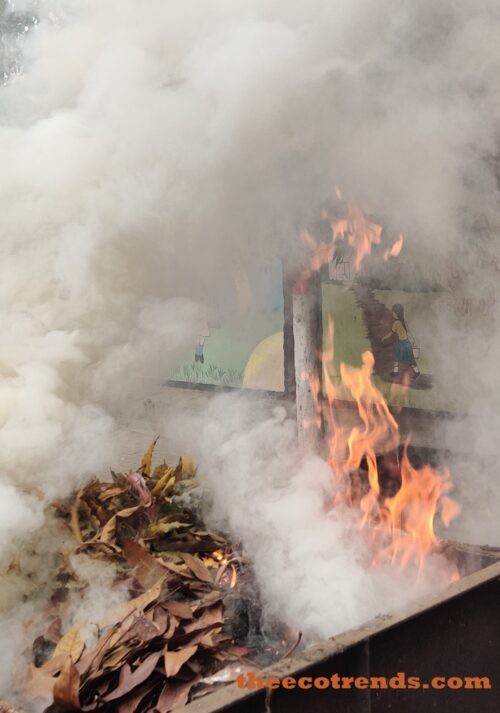
It is reported that about 30 million tones of dry leaves are dumped into landfills every year in America. In India most of these leaves are either burnt on the floor where they fall or collected by poor people and stored for burning during winter season to generate heat.