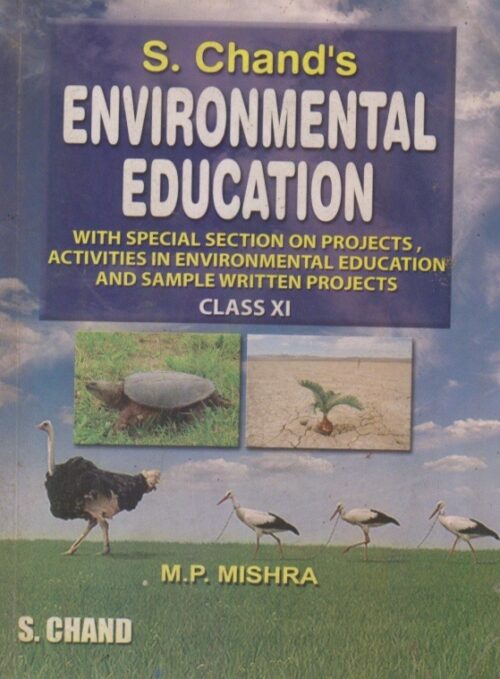
Books on Environmental Awareness by Dr. M. P. Mishra
Book Review S. CHAND’S ENVIRONMENTAL EDUCATION CLASS XI BY DR. M. P. MISHRA PURPOSE OF THE BOOK This book on…
Book Review S. CHAND’S ENVIRONMENTAL EDUCATION CLASS XI BY DR. M. P. MISHRA PURPOSE OF THE BOOK This book on…
Peperomia pellucida is commonly known as shining bush plant and Pepper elder. It commonly grows in the wild in moist shady places. In Jharkhand it is found growing during rainy season at the banks of streams or near old walls.
The Makar Sankranti, the festival of Sun Worship and the festival of harvest is usually celebrated on 14th or 15th of January every year. This year, it is going to be celebrated on the 14th January 2021.
Anything from which we can derive energy is called as a source of energy. Since all the life processes need energy, energy is most important for our survival. Our body derives energy from the food we eat. Thus, the food we eat is the source of energy for our body. But this is not the whole story. We need energy for our growth and economic development as well.
The dry weight of organic matter produced by plants, their derivatives and wastes are called as BIOMASS. The biomass includes crop residues, plant parts, body parts of dead animals and animal wastes. As biomass is created due to photosynthesis by plants, so energy from biomass or bio wastes is regarded as another form of solar energy.
Control and Coordination in animals are performed by the activities of different types of chemical substances. These chemical substances are known as Animal Hormones.
Neighbourhood is a geographically localized community within an area, may it be a rural area, a town or a city, or sub-urban. Neighbourhood are considered as social communities in which face-to-face interaction among people take place.
The digested food is absorbed into the body from where it is distributed to all its cells.
Animals can be categorized mainly into two categories- domestic, and wild. However, the domestic animals that live under wild conditions are called Feral Animals.
Conservation of species in their natural habitats- in areas where they occur under normal conditions is called in-situ conservation.
This type of conservation strategy protects the entire area. Such an area is protected and maintained to conserve all the known or unknown species inhabiting it.
In this type of conservation, species are not isolated or provided with health care, food, or mating facilities. Only factors detrimental to species’ existence and development are eliminated in this conservation strategy. Human interference, such as hunting, cutting down trees, collecting firewood, etc., is completely banned in such areas.
In India, a Hazardous Substances Management Division has been constituted as a nodal point within the Ministry of Environment and Forest. This nodal agency is responsible for Planning, over-seeing and implementing the policies and programmes on management of hazardous substances and Chemical Emergencies.
Consumers too utilize some energy in their metabolic processes. Under these conditions some energy escapes away in the form of their body heat and some energy is wasted through excretory matter from their bodies. The rest of the energy goes into the atmosphere when top consumer dies and its body is decomposed.