forest

Advertisement
January 1, 2025

Various Important Alternatives to Deforestation

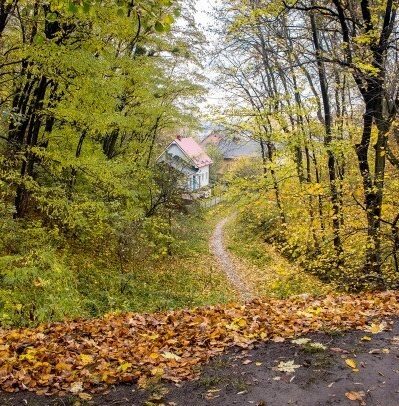
Deforestation contributes up to 20 percent of greenhouse gas emission which is more than the combined emission by all the cars, trucks, planes, boats and, trains of the world. Deforestation threatens our climate. Besides this, it threatens the livelihoods of 1.6 billion people who depend on forests for food and economic activities. They serve as habitats to rare and so far, undiscovered species of plants and animals. They also play a key role in maintaining water cycles and preventing floods and soil erosion. Hence, forests across the world need urgent measure of protection by all possible ways, may it be through alternatives to deforestation.

Read Article
December 24, 2024

Conservation and Management of Forest

A forest is a highly complex and constantly changing environment. It is made up of a variety of living things like wildlife, trees, shrubs, wildflowers, ferns, mosses, lichens, fungi and microscopic soil organisms; and non-living things such as water, nutrients, rocks, sunlight and air. Trees are the biggest part of this complex community.

Read Article
September 28, 2024

Types of Ecosystems – Terrestrial and Aquatic

Ecosystems can be categorised into two broad categories: natural and artificial. Natural Ecosystems are those ecosystems that operate by themselves under natural conditions. These ecosystems are further categorized as Terrestrial and Aquatic Ecosystems. Terrestrial ecosystems relate to lands, whereas Aquatic ecosystems relate to fresh or marine water. Freshwater ecosystems may be Lotic or Lentic. Lotic are running water ecosystems like springs, streams or rivers, whereas Lentic Fresh Water Ecosystems may be found in standing waters of lakes, ponds, pools, puddles, ditches, swamps, etc. Marine Ecosystems are found in marine waters of salt lakes, seas, oceans and estuaries. Artificial Ecosystems are man-engineered ecosystems like crop fields, artificial ponds and lakes, aquaria, fish ponds, and abandoned mines reclaimed as lakes or water bodies for recreation.

Read Article
January 8, 2023

Forests and their types

A forest is a highly complex and constantly changing environment. It is made up of a variety of living things like wildlife, trees, shrubs, wildflowers, ferns, mosses, lichens, fungi and microscopic soil organisms; and non-living things such as water, nutrients, rocks, sunlight and air. Trees are the biggest part of this complex community.

Read Article
January 21, 2021

Terrestrial Ecosystems and Their Components

The biosphere is itself a vast ecosystem which incorporates all the small ecosystems. But, the biosphere may have different types of physical conditions, communities of plants and animals, and climatic conditions in its different zones.

Read Article
April 4, 2025 Recommended

New Organic Fertilizers

Biofertilizers: Definition, Types, Benefits, and Uses in Sustainable Agriculture The fertilizers of biological origin that don’t contain any chemicals detrimental…

Read Article
October 22, 2021 Recommended

Determination of sex in living organisms

Determining male or female form of living organism through sexual reproduction is called as sex determination. Sex determination on a large scale is of two types- environmental, genetic and chromosome based.

Read Article
Advertisement
Gallery Picture
Gallery Picture
Gallery Picture
Gallery Picture
Gallery Picture
Gallery Picture
Gallery Picture
Gallery Picture
Gallery Picture
Gallery Picture
Gallery Picture
Gallery Picture
Gallery Picture
Gallery Picture
Gallery Picture
Gallery Picture
Gallery Picture
Gallery Picture
Gallery Picture
Gallery Picture
Gallery Picture