hereditary

Advertisement
September 21, 2024

Adaptations to Environmental Changes

The conditions of a habitat remain changing abruptly and periodically. Abrupt changes in environment often do not give time to an organism to get ready and to face the challenges. As such the organism can survive only when it has sufficient abilities to tolerate these changes.

Read Article
July 15, 2021 Recommended

Crafts and their cultural importance

India has a vibrant tradition of crafts. Though agriculture employs largest number of people in this country, craft section employs and sustains over twenty million people.

Read Article
February 13, 2023 Recommended

Darwin Day

Darwin published his book “On the Origin of Species” on 24 November 1859. The aim of Darwin Day inspires to fulfil the academic curiosities. It demands to search the truth in scientific ways.

Read Article
January 29, 2021 Recommended

Animal Husbandry and Milch Cattle

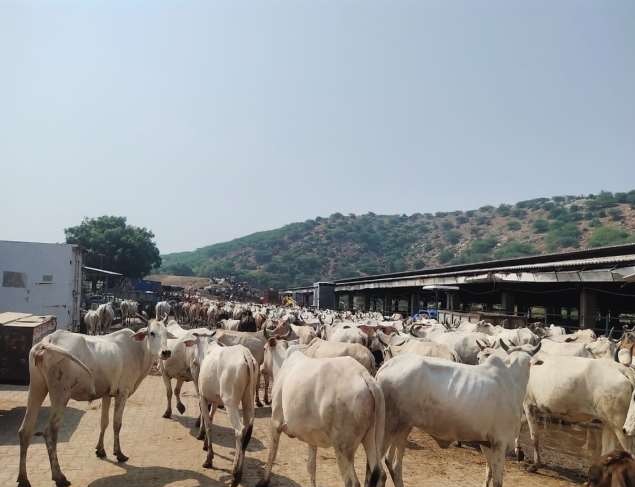
We rear and take care of animals to take their support in food production. Their systematic and proper rearing and also the arrangement for their proper reproduction and management are called as Animal Husbandry.

Read Article
March 23, 2023 Recommended

Landfilling and Incineration

Land-filling is the process of disposing solid waste in low lands or into trenches through proper sanitary methods. It involves- collection, transport, compaction, etc. processes along with proper management for gas-outlet etc. For land filling, the important thing to be taken into account is the distance of waste collection site to the waste dumping site, because it involves cost of transportation.

Read Article
August 28, 2024 Recommended

What is Ozone layer? How is it depleted and what are the control measures?

Ozone absorbs ultraviolet radiations so that much of it is never allowed to reach to the earth surface. The protective umbrella of ozone layer in the stratosphere protects the earth from harmful ultraviolet radiations. Ozone plays an important role in the biology and climatology on the earth’s environment. It filters out all the radiations that remain below 3000Å. Radiations below this wavelength are biologically harmful. Hence any depletion of ozone layer is sure to exert catastrophic impacts on life in the biosphere.

Read Article
Advertisement
Gallery Picture
Gallery Picture
Gallery Picture
Gallery Picture
Gallery Picture
Gallery Picture
Gallery Picture
Gallery Picture
Gallery Picture
Gallery Picture
Gallery Picture
Gallery Picture
Gallery Picture
Gallery Picture
Gallery Picture
Gallery Picture
Gallery Picture
Gallery Picture
Gallery Picture
Gallery Picture
Gallery Picture