Monoculture

Advertisement
March 10, 2025

Monoculture and its impact on the Environment

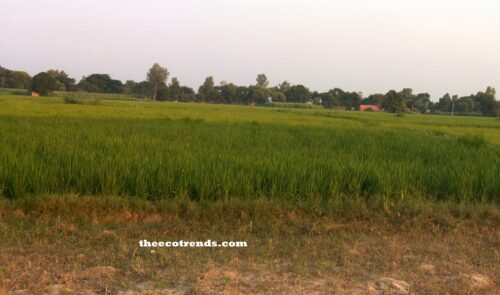
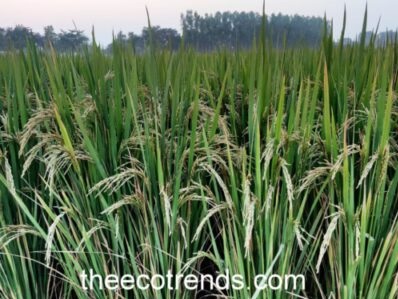
Growing a single crop species over a large area or farm is called intensive farming or monoculture. Earlier practices of mixed cropping caused problems in crop management, like harvesting, etc. Uniformity in plant height adds beauty to our fields and makes the application of agrochemicals easy. It also saves time and energy in segregating grains in threshing.

Read Article
February 15, 2025

Modern Agriculture and Monoculture

More than half of the population of the world comprises farmers. These farmers know that maintaining and conserving natural resources are very important to sustain their lives. However, the demand of more and more food due to the exploding population and higher expectations for comfort and wealth enforces these farmers to exploit more and more of the natural resources through the application of modern technology. The agriculture based on the latest farm machinery, hybrid and high-yielding crop varieties and agrochemicals is called as modern agriculture. Under the changing trends of modern agriculture, the difficult situation of maintaining and conserving natural resources is being faced the world over in the agriculture sector.

Read Article
August 7, 2020 Recommended

Teaching the Environmental Education

Teaching of environmental education is rather different. In involves practical experiences. For this both indoor and outdoor studies are essential.It also involves parents and community

Read Article
April 8, 2021 Recommended

Aadya Links Relations

Aadya a three years girl lives with her Nani, Nanoo, and Mom in a flat of a big apartment. Her mother is a Senior Secondary teacher and her father is a scientist in IIT, Mumbai.

Read Article
October 25, 2024 Recommended

Types of species

Species can be classified in many different ways. One species classification system may categorise species into Typological, evolutionary, and phylogenetic species.

Read Article
December 30, 2024 Recommended

Land Management- Principles and Key Components

With the growth of human population, more and more land was cleared for cultivation, housing and cattle rearing. Later, as towns and cities started developing, vast areas of land were started to be consumed in making roads, rail tracks, bridges, buildings, markets, trade centres, Educational and Research Centres, hospitals, railway junctions, etc.

Read Article
Advertisement
Gallery Picture
Gallery Picture
Gallery Picture
Gallery Picture
Gallery Picture
Gallery Picture
Gallery Picture
Gallery Picture
Gallery Picture
Gallery Picture
Gallery Picture
Gallery Picture
Gallery Picture
Gallery Picture
Gallery Picture
Gallery Picture
Gallery Picture
Gallery Picture
Gallery Picture
Gallery Picture
Gallery Picture