World Water Week 2020 – at Home
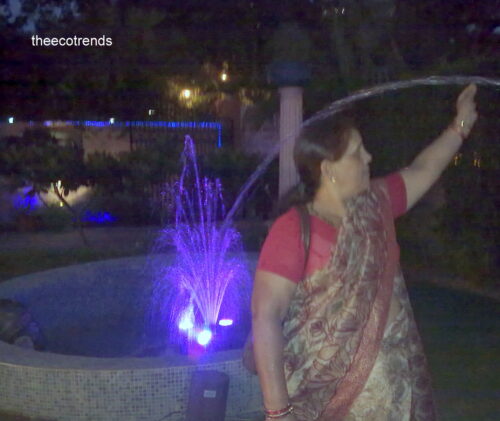
World Water Week Stockholm is celebrated every year from 23 to 28 Aug. every year. Due to pandemic covid-19 it is taking place from 24 to 28 Aug. this year with a theme- World Water Week at Home.
World Water Week Stockholm is celebrated every year from 23 to 28 Aug. every year. Due to pandemic covid-19 it is taking place from 24 to 28 Aug. this year with a theme- World Water Week at Home.
The Conservation Status of Biodiversity is usually known through the comprehensive Inventory prepared periodically by the IUCN, the International Union for the Conservation of Nature and Natural Resources. This comprehensive Inventory of the Conservation Status of Species is popularly known as the Red List or the Red Data List.
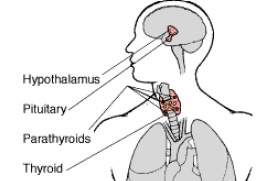
This is a pea sized major endocrine gland. It is protected by a boney cavity called Sella turcica of the sphenoid bone. It is a protrusion of bottom of Hypothalamus at the base of the brain. This gland is also called as Hypothesis.
Studies and researches that are done in different fields from time to time show increasing complexities in organisms than their ancestors. These studies and evidences show many important evidences of organic evolution.
A Pesticide is a chemical substance of natural or synthetic origin. It is applied in different forms to kill pests. Pests are living organisms that tend to harm humans, their crops and animals or have a tendency to disturb general household and living conditions. Some organisms can also be applied to kill pests. These organisms are called as biopesticides. On the other hand, pesticides that are synthesized in factories are called as synthetic pesticides.
When a new plant is developed or caused to develop through stem, root or leaf the method is called as vegetative reproduction. In other words, vegetative reproduction means- reproduction through anyone of the vegetative parts of the plant.
Bottle Gourd is also known as Calabas, White- flowered Gourd and Tasmanian Bean. Taxonomically, it is known as Lagineria siceraria belonging to the family Cucurbitaceae. It is a vine which is cultivated for its fruit used as a vegetable.
Non-renewable resources coal and petroleum are energy sources that we use and consume faster than the rate of their production in nature.
Ecosystems can be categorised into two broad categories: natural and artificial. Natural Ecosystems are those ecosystems that operate by themselves under natural conditions. These ecosystems are further categorized as Terrestrial and Aquatic Ecosystems. Terrestrial ecosystems relate to lands, whereas Aquatic ecosystems relate to fresh or marine water. Freshwater ecosystems may be Lotic or Lentic. Lotic are running water ecosystems like springs, streams or rivers, whereas Lentic Fresh Water Ecosystems may be found in standing waters of lakes, ponds, pools, puddles, ditches, swamps, etc. Marine Ecosystems are found in marine waters of salt lakes, seas, oceans and estuaries. Artificial Ecosystems are man-engineered ecosystems like crop fields, artificial ponds and lakes, aquaria, fish ponds, and abandoned mines reclaimed as lakes or water bodies for recreation.
Our environment today is facing a number of problems. All those problems are causing dangers to take shape against the existence of the whole biosphere of this planet. But who is behind all those problems? The answer is – M A N.
Control and Coordination in animals are performed by the activities of different types of chemical substances. These chemical substances are known as Animal Hormones.
community in India has traditionally been rearing sheep to earn their livelihood. Circus owners still keep many types of animals as performers and earn money through their shows.