Dr. MP Mishra

Dr. MP Mishra

Dr. M. P. Mishra is a noted environmentalist of India. He is known for his researches in environment conservation, wildlife activism, and for his writings. He has been internationally known for his Bird Housing Project which was devoted to protection and conservation of terrestrial bird species especially in Jharkhand. He has a deep study of the people of Jharkhand, their rituals, arts and crafts and has wandered extensively to study their conditions, their agriculture, their modes of lives, and their skills. Since last many years he has been continuously writing about various environmental and social issues of Jharkhand and has forty six books to his credit. His articles are regularly published in local and national dailies of India. His books on Environmental Awareness, Environmental Science, Environmental Studies, General Science, and biology are widely read and many of his books have been adopted in the schools of foreign countries. His books on Environmental Science have been adopted by the Council of Higher Secondary Education, Orissa, and the Council of Higher Secondary Education Nagaland and Meghalaya.

Dr. Mishra is an excellent teacher with innovative ideas and new teaching methodologies. It was due to his commendable services to education that the Department of Human Resources Development, State Government of Jharkhand offered him State Award in the year 2009-010.Dr. Mishra has been awarded with the Presidential Medal and the National Award for the year 2012 for his outstanding Researches in and great contributions to Science and Environment. He has been an active Science Communicator and coordinator of National Council of Science and Technology Communication, Ministry of Science and Technology, Government of India. He is a member of the Environmental Monitoring Committee under the Jharkhand Academic Council, Jharkhand, Ranchi. It was due to his voluntary services in the field of environment that he has been selected as a nominee of the Committee for Ethical Treatment to Animals, Ministry of Environment and Forest, Government of India. He has been the Chief Editor of ECOSOC the Environmental Newsletter of International Circulation for more than ten years. He has been the President of the People for Animals for about ten years. As a teacher he is always admired by his students and the academic community across the globe.

August 20, 2022

Energy from Oceans- Tidal Energy, Wave Energy and Oceanic Thermal Energy

Ocean is a vast natural resource of water. These have also been examined in the search for alternate sources of energy-generation. For example, gravitational pull, by sun and moon causes tides, in which sea level rises and falls, two times in 24 hours. When it rises, sea water may be diverted through suitable channels, to inshore reservoirs driving the turbines, during its entry.

Read Article
August 19, 2022

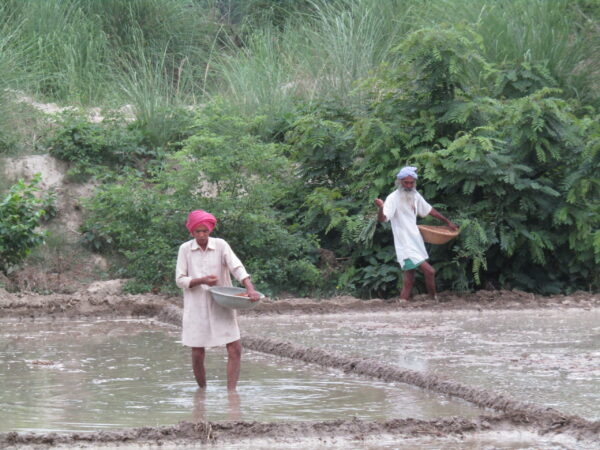
Hunger, Famine, and Nutritional Deficiency Diseases

People who suffer from hunger remain undernourished. They don’t get enough food to eat. As such they don’t get energy, they need to live active lives. Undernourished persons remain unable to study, work or otherwise perform physical and mental activities. This condition is especially hard for women and children. Continuous hunger weakens the immune system and makes them vulnerable to diseases and infections. Mothers who suffer continuous hunger often give birth to underweight and weak babies, and they face increased risk of death.

Read Article
August 17, 2022

People’s Movements to protect forests

There have been a number of environmental movements in India through which people have been protesting for conservation of forests and other natural resources. Here some important People’s Movements have been introduced in brief.

Read Article
August 15, 2022

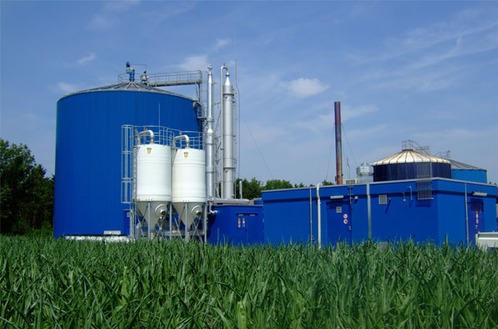
Biogas and Biogas Plant

Biogas is a mixture of 56% methane gas (CH4), 40% carbon dioxide (C02) and rest, a mixture of H2, H2S and N2. It is produced by digestion, Pyrolysis and hydro gasification in a specific plant called as Biogas Plant. Biogas plants are of various types like — Janata biogas plant, Dean Bandhu biogas plant, Khadi and Village Industries Corporation (KVIC) type biogas plant, Pragati Design biogas plant and Chinese biogas plant.

Read Article
August 15, 2022

Biomass Energy and its implications

The dry weight of organic matter produced by plants, their derivatives and wastes are called as BIOMASS. The biomass includes crop residues, plant parts, body parts of dead animals and animal wastes. As biomass is created due to photosynthesis by plants, so energy from biomass or bio wastes is regarded as another form of solar energy.

Read Article
August 14, 2022

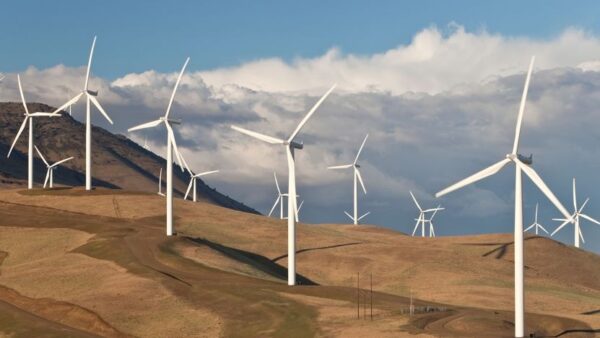
All about wind energy

The Wind is Air in Motion. It is caused by differential heating of land, water, hills and mountain slopes by sun rays. About 25 % (i.e., 0.34 KW/m2) of incident solar radiation is dissipated as wind energy. There is kinetic energy in wind.

Read Article
August 12, 2022

Food spoilage and preservation

Food spoilage is the undesired process through which the quality of food deteriorates to a point that it no longer remains fit for eating. Such a food becomes harmful or poisonous and any one eating such type of food may fall ill seriously. 

Read Article
August 12, 2022

Components and sources of food

The food eaten by any one comprises many different components like – Carbohydrates, Proteins, fats, Minerals, and Vitamins and water. For humans and big animals water too has been accepted as a necessary component of food.

Read Article
August 12, 2022

Leaf fall and Compost making

Plants and trees shed their leaves from time to time. This happens due to a number of reasons. From some plants and tree leaves continue falling throughout the year. At the same time new leaves continue developing to compensate their number.

Read Article