Dr. MP Mishra

Dr. MP Mishra

Dr. M. P. Mishra is a noted environmentalist of India. He is known for his researches in environment conservation, wildlife activism, and for his writings. He has been internationally known for his Bird Housing Project which was devoted to protection and conservation of terrestrial bird species especially in Jharkhand. He has a deep study of the people of Jharkhand, their rituals, arts and crafts and has wandered extensively to study their conditions, their agriculture, their modes of lives, and their skills. Since last many years he has been continuously writing about various environmental and social issues of Jharkhand and has forty six books to his credit. His articles are regularly published in local and national dailies of India. His books on Environmental Awareness, Environmental Science, Environmental Studies, General Science, and biology are widely read and many of his books have been adopted in the schools of foreign countries. His books on Environmental Science have been adopted by the Council of Higher Secondary Education, Orissa, and the Council of Higher Secondary Education Nagaland and Meghalaya.

Dr. Mishra is an excellent teacher with innovative ideas and new teaching methodologies. It was due to his commendable services to education that the Department of Human Resources Development, State Government of Jharkhand offered him State Award in the year 2009-010.Dr. Mishra has been awarded with the Presidential Medal and the National Award for the year 2012 for his outstanding Researches in and great contributions to Science and Environment. He has been an active Science Communicator and coordinator of National Council of Science and Technology Communication, Ministry of Science and Technology, Government of India. He is a member of the Environmental Monitoring Committee under the Jharkhand Academic Council, Jharkhand, Ranchi. It was due to his voluntary services in the field of environment that he has been selected as a nominee of the Committee for Ethical Treatment to Animals, Ministry of Environment and Forest, Government of India. He has been the Chief Editor of ECOSOC the Environmental Newsletter of International Circulation for more than ten years. He has been the President of the People for Animals for about ten years. As a teacher he is always admired by his students and the academic community across the globe.

February 15, 2025

Modern Agriculture and Monoculture

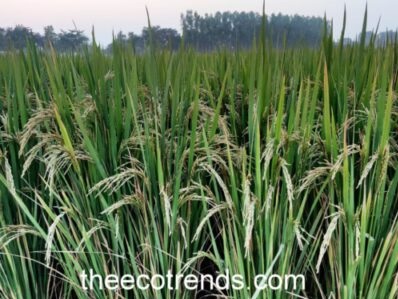
More than half of the population of the world comprises farmers. These farmers know that maintaining and conserving natural resources are very important to sustain their lives. However, the demand of more and more food due to the exploding population and higher expectations for comfort and wealth enforces these farmers to exploit more and more of the natural resources through the application of modern technology. The agriculture based on the latest farm machinery, hybrid and high-yielding crop varieties and agrochemicals is called as modern agriculture. Under the changing trends of modern agriculture, the difficult situation of maintaining and conserving natural resources is being faced the world over in the agriculture sector.

Read Article
January 5, 2025

Recycling and Paper Industry

The process of recovering or reusing usable materials from discarded waste is called recycling. For example, about 15 per cent of Sulphuric acid is recycled in chemical manufacturing. In the early days, all the sulphur needed for the production of sulphuric acid was taken out of mines directly. But now, with the prevailing tendencies of recycling, sulphuric acid manufacturing industries are using sulphur from smelters, refineries, etc.

Read Article
January 3, 2025

Adoption of Zero Deforestation Policies by corporations and markets

It is said that corporations can destroy the world’s intact forests. They have also the Power to help save them. They can make an impact by introducing zero- deforestation policies. These policies require suppliers to produce commodities such as timber, beef, palm oil, and fibres for paper in such a way that has a minimal impact on natural forests and climate. These can also introduce paper procurement policies that set ambitious targets to maximise the use of post-consumer recycled wood, pulp, paper and fibre in their products and ensure that any virgin fibre used is certified by a rigorous third-party certification system.

Read Article
January 1, 2025

Various Important Alternatives to Deforestation

Deforestation contributes up to 20 percent of greenhouse gas emission which is more than the combined emission by all the cars, trucks, planes, boats and, trains of the world. Deforestation threatens our climate. Besides this, it threatens the livelihoods of 1.6 billion people who depend on forests for food and economic activities. They serve as habitats to rare and so far, undiscovered species of plants and animals. They also play a key role in maintaining water cycles and preventing floods and soil erosion. Hence, forests across the world need urgent measure of protection by all possible ways, may it be through alternatives to deforestation.

Read Article
December 30, 2024

Land Management- Principles and Key Components

With the growth of human population, more and more land was cleared for cultivation, housing and cattle rearing. Later, as towns and cities started developing, vast areas of land were started to be consumed in making roads, rail tracks, bridges, buildings, markets, trade centres, Educational and Research Centres, hospitals, railway junctions, etc.

Read Article
December 29, 2024

Land Management, Its Needs and Principles

Land management is the process of managing the use and development of land resources in rural and urban areas. Land resources are used for a variety of purposes which may include organic agriculture, reforestation, water resource management and eco-tourism projects.

Read Article
December 28, 2024

Land Pollution -Sources and Prevention

Some environmentalists define land pollution as – build up of toxic chemical compounds, salts, pathogens or radioactive materials in soil that can affect plant and animal life adversely, is called as soil pollution.

Read Article