Mechanism of Breathing and Cellular Respiration
The mechanical process of breathing involves inspiration and expiration.
The mechanical process of breathing involves inspiration and expiration.
Respiration is different in aquatic and terrestrial animals. Aquatic animals repire by means of gills and skin while terrestrial animals breathe in through lungs.
The digested food is absorbed into the body from where it is distributed to all its cells.
In a human being the ingestion of food is brought about in mouth where it is crushed into fine pieces by teeth.
Mode of nutrition through which an organism depends on other organisms for food due to its inability to synthesise food is called as heterotrophic nutrition.
According to the World Health Organisation (WHO) – Nutrition is the intake of food, considered in relation to the body’s dietary needs.
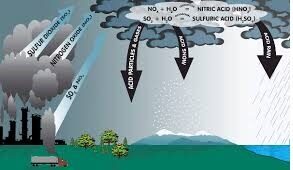
The acid rain affects living and non- living components of environment. In July 1982, Stockholm- the venue of U N –conference on acid rain, suffered heavy acid showers for about a week. In India too, acid rains have been reported since last twenty years in areas where thermal power plants are located and also around Delhi, the capital of India.
A forest is a highly complex and constantly changing environment. It is made up of a variety of living things like wildlife, trees, shrubs, wildflowers, ferns, mosses, lichens, fungi and microscopic soil organisms; and non-living things such as water, nutrients, rocks, sunlight and air. Trees are the biggest part of this complex community.
Natural habitats support a variety of living organisms, some of which endemic to one particular habitat.
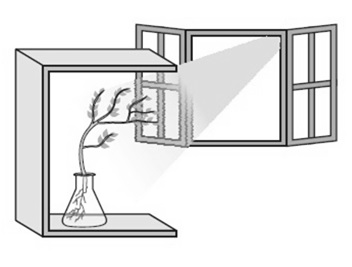
The positive movements of a plant shoot in response to light or movement of shoot towards the source of light is called as Phototropism. If the part of a plant moves away from light, this movement is called as Negative Phototropism.