
Crafts and their cultural importance
India has a vibrant tradition of crafts. Though agriculture employs largest number of people in this country, craft section employs and sustains over twenty million people.
India has a vibrant tradition of crafts. Though agriculture employs largest number of people in this country, craft section employs and sustains over twenty million people.
Human activities have never been friendly to environment. The remains of Mohenjo-Daro and Harappa signify that the civilization ended due to desertification which might had been caused by large scale deforestation. Still today impacts of such human activities have started appearing. Hence it is essential that we manage our natural resources properly.
There are many different types of technologies or technological models- such as Low-tech, Hi-tech, alternative, intermediate, appropriate, blended, hard, and soft technologies.
A Pesticide is a chemical substance of natural or synthetic origin. It is applied in different forms to kill pests. Pests are living organisms that tend to harm humans, their crops and animals or have a tendency to disturb general household and living conditions. Some organisms can also be applied to kill pests. These organisms are called as biopesticides. On the other hand, pesticides that are synthesized in factories are called as synthetic pesticides.
Cattle dung has been used in India to sweep cutcha houses and to make cakes for burning in kitchens. One of the best uses of dung is for making compost etc. manure. Indians, especially Hindus use cow dung for making compost, dung cakes and for religious purposes.
The Industrial Policy Initiative undertaken by the Central Government in July 1991, made the Indian Industry to compete on International Levels. As a result, an Industrial Licensing Policy was adopted in 1991. It was followed by a number of steps like Liberalization of Foreign Investment in Banking Sector, Technological Collaboration with other countries, Creation of Special Economic Zones and, Simplification of Industrial Licensing and Promotion of Exports etc.
Prevention of entry into the environment: According to this principle, pollutants are checked at the point of their origin and are not allowed to enter into the environment by the application of specific devices.
As per an assessment, about 600 million people inhabited urban areas of the world in the year 1950. But now urban areas have been recorded to be inhabited by about half of the total population.
According to the World Health Organisation (WHO) – Nutrition is the intake of food, considered in relation to the body’s dietary needs.
Fighting against the Climate Change which has become the biggest problem of environment is a big challenge of today.
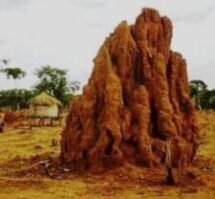
Ant colonies are Eusocial which means living in a cooperative group in which usually one female and several males are reproductively active and the non-breeding individuals care for the young and protect the group. These are very much like those found in other social animals though the various groups of these developed sociality independently through convergent evolution.
Eating together is a traditional practice not only in India but in most of the countries of the world. It is practiced in all types of societies and in all cultures.