
The increasing Human Population is putting immense pressure on Resources
A population is a group of individuals of a particular species occupying a particular area at a specific time.
A population is a group of individuals of a particular species occupying a particular area at a specific time.
Modern development has caused a number of environmental problems at local, regional, national and international levels. Global Climate Change, depletion of ozone layer, increasing inequality, reduction in the means of livelihood for poor, scarcity of food, increasing number of disasters, extinction of species, falling underground water table etc. are some of the major environmental problems created by modern unsustainable development. These problems are challenging the existence of human race on this planet.
Control and Coordination in animals are performed by the activities of different types of chemical substances. These chemical substances are known as Animal Hormones.
A substance, factor, change, living being or a system that quantifies and simplifies phenomena and helps in understanding complex realities,…
The first Dahlia flower in winter of the year was seen by me only today in my school garden. It looked so solitary, innocent and so beautiful that I could not resist the temptation of taking its photograph.
The South West Monsoon is ready to go in a delayed manner. It is returning late continuously since last three years.
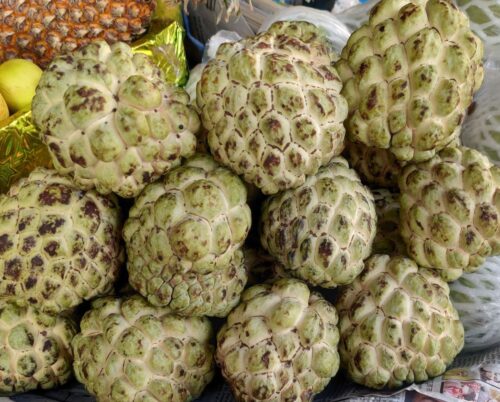
Sugar apple or Sharifa is the fruit of taxonomically known tree Annona squamosa. It is native to tropical climate in the Americas and West Indies.
The dictionary meaning of a shelter is – something beneath, behind, or within which a person, animal or anything is protected from adverse conditions, and where it can reproduce is called as a shelter.
According to their physical make up, there are basically two types of animals- Vertebrates and invertebrates. Invertebrates are those animals that don’t have a vertebral column or backbone. On the other hand, Vertebrates are those animals who have a vertebral column or the back bone.
In view of offering right price to vegetable growers and making their business free from mediators, the Government of Jharkhand (India) is in a mood to fix Minimum Support Price (MSP) for vegetables from this year.
In a human being the ingestion of food is brought about in mouth where it is crushed into fine pieces by teeth.
Ecosystems can be categorised into two broad categories: natural and artificial. Natural Ecosystems are those ecosystems that operate by themselves under natural conditions. These ecosystems are further categorized as Terrestrial and Aquatic Ecosystems. Terrestrial ecosystems relate to lands, whereas Aquatic ecosystems relate to fresh or marine water. Freshwater ecosystems may be Lotic or Lentic. Lotic are running water ecosystems like springs, streams or rivers, whereas Lentic Fresh Water Ecosystems may be found in standing waters of lakes, ponds, pools, puddles, ditches, swamps, etc. Marine Ecosystems are found in marine waters of salt lakes, seas, oceans and estuaries. Artificial Ecosystems are man-engineered ecosystems like crop fields, artificial ponds and lakes, aquaria, fish ponds, and abandoned mines reclaimed as lakes or water bodies for recreation.