Books on Environmental Awareness by Dr. M. P. Mishra
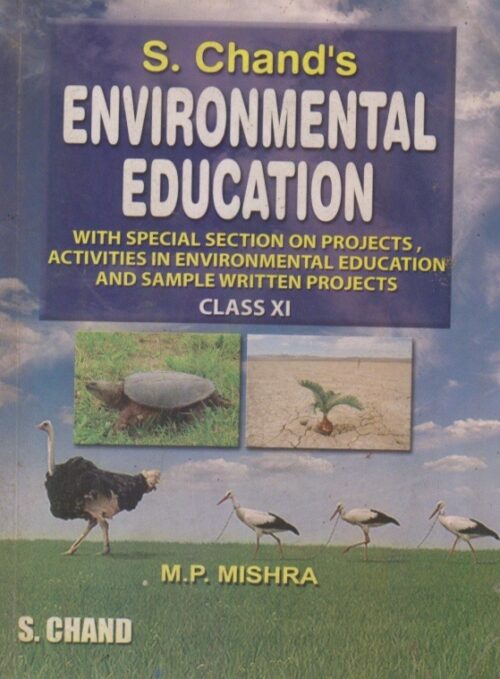
Book Review S. CHAND’S ENVIRONMENTAL EDUCATION CLASS XI BY DR. M. P. MISHRA PURPOSE OF THE BOOK This book on…
Book Review S. CHAND’S ENVIRONMENTAL EDUCATION CLASS XI BY DR. M. P. MISHRA PURPOSE OF THE BOOK This book on…
The process by which a new species is introduced into a habitat is called as Bio invasion. A number of…
The dry weight of organic matter produced by plants, their derivatives and wastes are called as BIOMASS. The biomass includes crop residues, plant parts, body parts of dead animals and animal wastes. As biomass is created due to photosynthesis by plants, so energy from biomass or bio wastes is regarded as another form of solar energy.
Both pomegranate and mango are nutritios fruits. These help us in keeping good health.
An area or structure that protects animals from adverse conditions is called an animal shelter. Different kinds of animals need different types of shelters. Different kinds of animals and their shelters are mentioned here.
Kinds of animals and their shelters
Animals can be classified into terrestrial, arboreal, aquatic and amphibians.
Terrestrial Animals
Land animals are called as terrestrial animals. Some of these animals like lion, tiger, bears and bats live in rock caves. Illustration
Snakes live in ground, under rocks and in abandoned ant hills. Some snakes live insid
Ant colonies are Eusocial which means living in a cooperative group in which usually one female and several males are reproductively active and the non-breeding individuals care for the young and protect the group. These are very much like those found in other social animals though the various groups of these developed sociality independently through convergent evolution.
Species become endangered due to both natural and anthropogenic causes. Since man has no control over natural causes, we should consider anthropogenic causes only. Anthropological causes may be classified into two fundamental categories: Direct Causes and Indirect or underlying causes.
The first Dahlia flower in winter of the year was seen by me only today in my school garden. It looked so solitary, innocent and so beautiful that I could not resist the temptation of taking its photograph.
In a human being the ingestion of food is brought about in mouth where it is crushed into fine pieces by teeth.
Interdependence between two species through which individuals of either one or both species benefit is called positive interdependence. The benefits to the individual of any species through this relationship may be continuous or transitory, obligate or facultative. Both partners in this type of relationship may be in close contact; one may be inside some specific area or attached to the surface of the other’s body. Positive interdependence is divided into three major types: mutualism, Commensalism, and proto-cooperation.
Growth and movements in plants occur due to internal and external factors. Plant hormones are internal factors while light, touch, gravity and other stimuli are external factors that affect plant growth and movements.
In early society, girls were restricted from play. They were restricted inside homes. This was something to do with our social conditions and traditions. But, girls are being given more rights today than they had earlier.