
Social Dimensions of Environment
The Social Dimensions of environment incorporate – Demographic Pattern, Life styles of people, Human Health and Habitat, and Social Interactions…
The Social Dimensions of environment incorporate – Demographic Pattern, Life styles of people, Human Health and Habitat, and Social Interactions…
The second corona outbreak has filled the society with terror.
Hindus and Hindu tribals believe that certain Gods live on some trees. They worship these trees and protect by all means. These trees are called as sacred groves.
Human activities have never been friendly to environment. The remains of Mohenjo-Daro and Harappa signify that the civilization ended due to desertification which might had been caused by large scale deforestation. Still today impacts of such human activities have started appearing. Hence it is essential that we manage our natural resources properly.
Different news agencies report the Supreme Court’s comment that no one can celebrate functions at the cost of lives of others.
Soil is the loose material that covers the land surface of the earth, supports the growth of plants and acts as a habitat for numerous organisms.
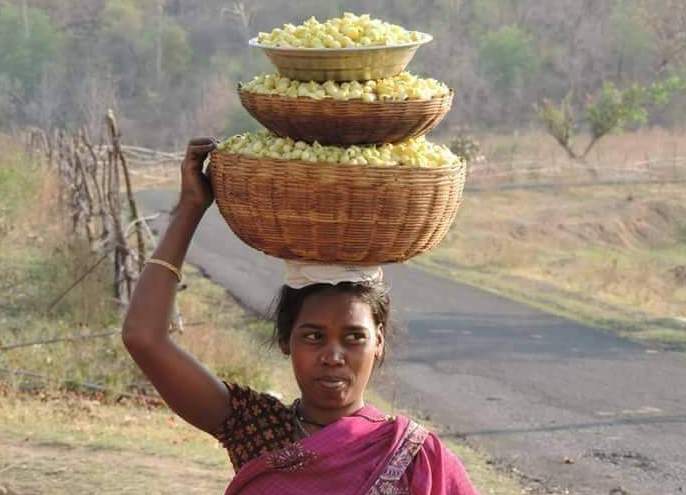
Mahaua or the Madhuca longifolia is indigenous to India. It is a good sized tree and it grows up to 20 meters in height.
We rear and take care of animals to take their support in food production. Their systematic and proper rearing and also the arrangement for their proper reproduction and management are called as Animal Husbandry.
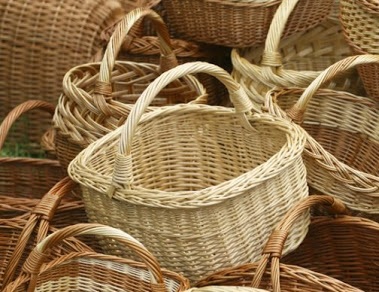
India has a vibrant tradition of crafts. Though agriculture employs largest number of people in this country, craft section employs and sustains over twenty million people.
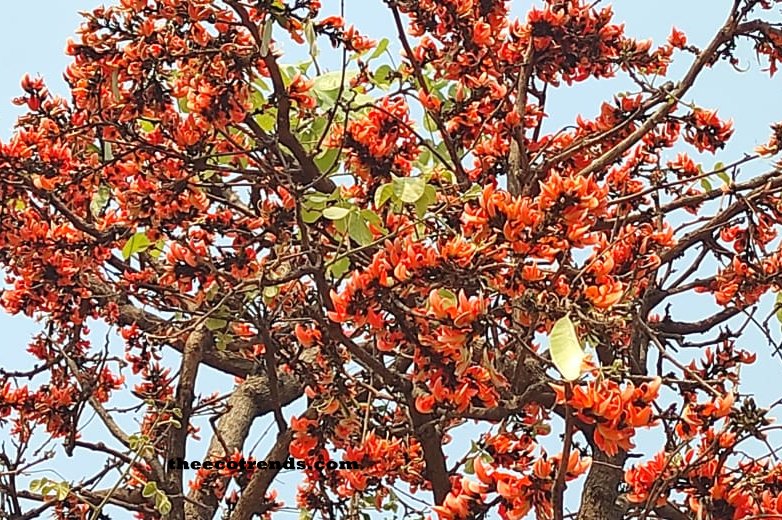
Palash or Butea monosperma is an important tree of taxonomic family Fabaceae which is native to tropical and sub-tropical India. It is also found in Pakistan, Bangladesh, Nepal, and Srilanka etc.
Energy is essential for working and survival of all the organisms on this planet. In fact, it is the energy which enables organisms to perform their biological functions.
It is said that corporations can destroy the world’s intact forests. They have also the Power to help save them. They can make an impact by introducing zero- deforestation policies. These policies require suppliers to produce commodities such as timber, beef, palm oil, and fibres for paper in such a way that has a minimal impact on natural forests and climate. These can also introduce paper procurement policies that set ambitious targets to maximise the use of post-consumer recycled wood, pulp, paper and fibre in their products and ensure that any virgin fibre used is certified by a rigorous third-party certification system.