
Important aspects of Crop Improvement & New Crop Varieties
Biotechnology in Agriculture: Applications, Techniques, and Benefits The scientific knowledge which is applied in practical ways in industry for the…
Biotechnology in Agriculture: Applications, Techniques, and Benefits The scientific knowledge which is applied in practical ways in industry for the…
Sparrow or the House Sparrow taxonomically belongs to the family Passeridae. It is found in most parts of the world.
A forest is a highly complex and constantly changing environment. It is made up of a variety of living things like wildlife, trees, shrubs, wildflowers, ferns, mosses, lichens, fungi and microscopic soil organisms; and non-living things such as water, nutrients, rocks, sunlight and air. Trees are the biggest part of this complex community.
I did not know about the Valentine’s Day or the Valentine’s Week even till I was married. I don’t know either when I knew about it.
Our natural resources are known to have some specific qualities of their own. These qualities are known as natural qualities. It is due to specific natural qualities that different natural resources have been useful to us and to the whole biosphere. But now, the condition has changed considerably.
Living beings interact among themselves in the same species, with the members of the other species, and with the components of the abiotic environment in an ecosystem. Interaction between the members of the same species is called as Intraspecific whereas the interaction among individuals of different species is called as Interspecific.
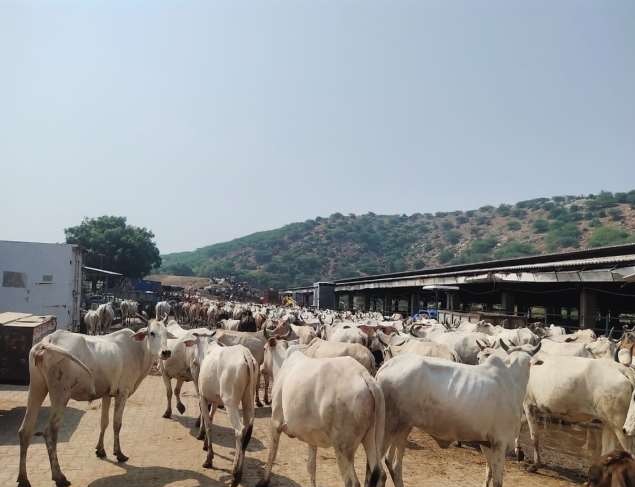
The engineer couple of Chandigarh, Punjab has established a biogas plant in Barsana. From this plant about 300 unit electricity is generated per day. It is through this electricity that fourteen tube wells are run in the Goshalas.
In India, a Hazardous Substances Management Division has been constituted as a nodal point within the Ministry of Environment and Forest. This nodal agency is responsible for Planning, over-seeing and implementing the policies and programmes on management of hazardous substances and Chemical Emergencies.
The scientists of Punjab Agricultural University (PAU), Ludhiana worked for ten years to develop a new High Yielding Variety of onion entitled POH-1.
The organic matter formed through degradation of decomposable biomass and which is rich in nutrients for the growth and development of plants is called as compost.
The bio-mechanical process of exchange of gases between an individual and his atmosphere is called as breathing.
The technique of carbon fixation has been developed by Dr. Ram Swaroop Meena of Banaras Hindu University, U.P. – India who has potentized his technique entitled “Low cost Biochar with Integrated Nutrient Management”.