Types of species
Species can be classified in many different ways. One species classification system may categorise species into Typological, evolutionary, and phylogenetic species.
Species can be classified in many different ways. One species classification system may categorise species into Typological, evolutionary, and phylogenetic species.
Traders have turned faces against Chinese goods this Diwali season. It has increased the hopes of Soil Workers (Potters) in India.
Cauliflower is a beautiful compact snow ball like vegetable if it is white. It remains surrounded by soft and long foliage.
New Technologies are developed for improving and increasing industrial production. Similarly, new projects are formulated for providing energy to those…
Following principles and guidelines have been accepted for the control of different types of pollution- A. Prevention of entry into…
Well, I am going to talk about a tree waiting to be cut down for the sake of opening the fifteenth gate of a Stadium, or for the sake of urban development.
The food eaten by any one comprises many different components like – Carbohydrates, Proteins, fats, Minerals, and Vitamins and water. For humans and big animals water too has been accepted as a necessary component of food.
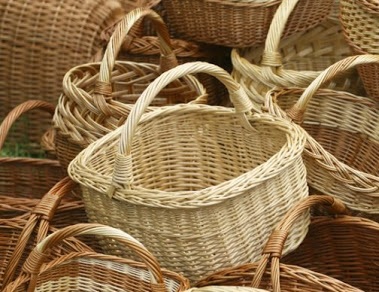
India has a vibrant tradition of crafts. Though agriculture employs largest number of people in this country, craft section employs and sustains over twenty million people.
According to the World Health Organisation (WHO) – Nutrition is the intake of food, considered in relation to the body’s dietary needs.
Mixing of different types of substances in soil- which affects its natural qualities, and reduces its fertility- is called as soil pollution. Some environmentalists define soil pollution as – build-up of toxic chemical compounds, salts, pathogens or radioactive materials in soil that can affect plant and animal life adversely, is called as soil pollution.
Abrupt changes in environment often do not give time to an organism to get ready and to face the challenges. As such the organism can survive only when it has sufficient abilities to tolerate these changes.
The bio-mechanical process of exchange of gases between an individual and his atmosphere is called as breathing.