Natural Resources and Their Types
Natural resources constitute both living and non-living resources. Non-living resources are renewable and non-renewable.
Natural resources constitute both living and non-living resources. Non-living resources are renewable and non-renewable.
Tulsi or the Holi Basil is taxonomically called as Ocimum tenuiflorum. It is an aromatic and perennial plant which belongs to the taxonomic family Lamiaceae
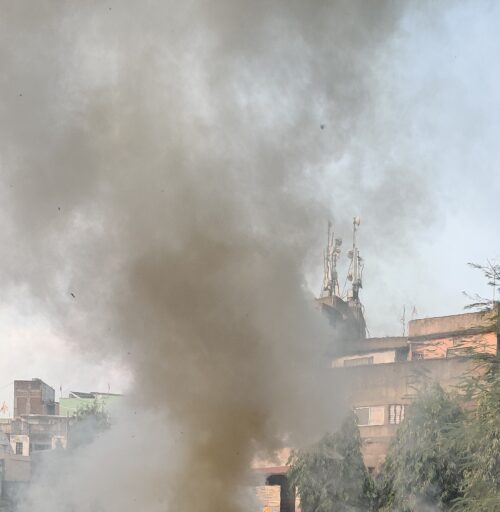
Human activities of pollution are modifying the natural process of green house effect. The advent of the Industrial Revolution in the 1700s boosted up the activities of burning of fossil fuels like coal, oil and natural gas which released lots of heat absorbing gases into the atmosphere.
Ozone absorbs ultraviolet radiations so that much of it is never allowed to reach to the earth surface. The protective umbrella of ozone layer in the stratosphere protects the earth from harmful ultraviolet radiations. Ozone plays an important role in the biology and climatology on the earth’s environment. It filters out all the radiations that remain below 3000Å. Radiations below this wavelength are biologically harmful. Hence any depletion of ozone layer is sure to exert catastrophic impacts on life in the biosphere.
A population is a group of individuals (all members of a single species) who live together in the same habitat and are likely to interbreed. Each population has a unique physical distribution in time and space. It may contain individuals of different ages, and its size (density) is likely to change over time. It grows or shrinks according to the reproductive success of its members.
Mixing of different types of substances in soil- which affects its natural qualities, and reduces its fertility- is called as soil pollution. Some environmentalists define soil pollution as – build-up of toxic chemical compounds, salts, pathogens or radioactive materials in soil that can affect plant and animal life adversely, is called as soil pollution.
Aadya a three years girl lives with her Nani, Nanoo, and Mom in a flat of a big apartment. Her mother is a Senior Secondary teacher and her father is a scientist in IIT, Mumbai.
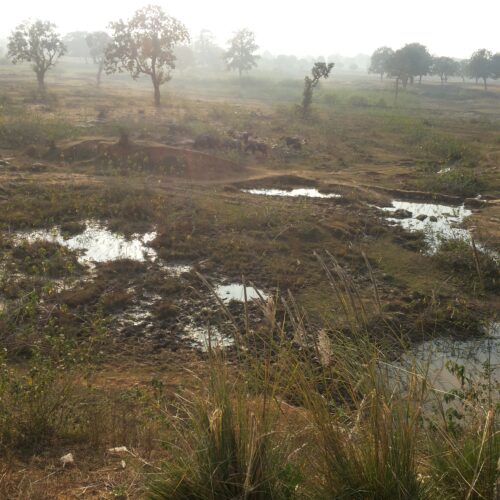
Ecosystems can be categorised into two broad categories: natural and artificial. Natural Ecosystems are those ecosystems that operate by themselves under natural conditions. These ecosystems are further categorized as Terrestrial and Aquatic Ecosystems. Terrestrial ecosystems relate to lands, whereas Aquatic ecosystems relate to fresh or marine water. Freshwater ecosystems may be Lotic or Lentic. Lotic are running water ecosystems like springs, streams or rivers, whereas Lentic Fresh Water Ecosystems may be found in standing waters of lakes, ponds, pools, puddles, ditches, swamps, etc. Marine Ecosystems are found in marine waters of salt lakes, seas, oceans and estuaries. Artificial Ecosystems are man-engineered ecosystems like crop fields, artificial ponds and lakes, aquaria, fish ponds, and abandoned mines reclaimed as lakes or water bodies for recreation.
Days have gone when students felt it very hard for them to have a friendly talk with their teachers. There were miles of hesitations between a students and teachers.
In the classroom set up many students were so shy and hesitant that they even did not lift up their hands to answer a question even when they knew it properly.
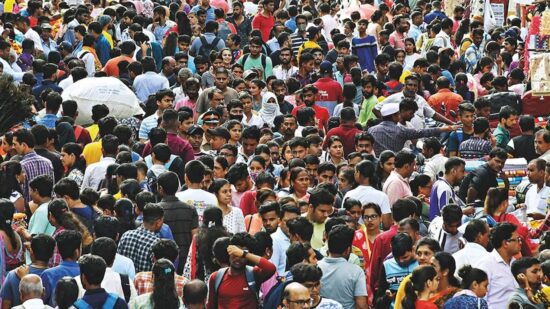
Through different means – natural and unnatural the process of keeping in a limit the growth of population is called as Population Control. It is essential for the welfare of human families. This is the reason why its name has been changed to the Family Welfare.
There are many different types of technologies or technological models- such as Low-tech, Hi-tech, alternative, intermediate, appropriate, blended, hard, and soft technologies.
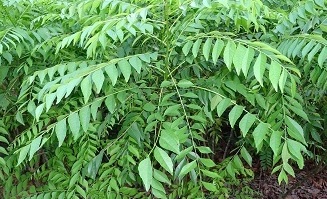
Kurry plant is a tropical or sub-tropical plant. It taxonomically belongs to family Rutaceae