
My Childhood Memories about Holi Festival
Holi is an ancient Hindu festival which is also called as the Festival of Colours, love and spring.
Holi is an ancient Hindu festival which is also called as the Festival of Colours, love and spring.
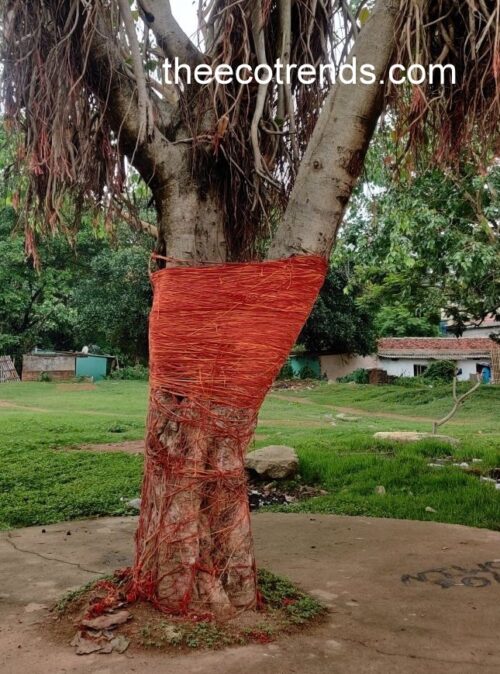
Tribal people of Jharkhand worship Karam Tree during their Karma Pooja. During this Pooja twigs of Karam Tree are planted at a sacred place. The Pahans (Purohits) worship these branches.
In early society, girls were restricted from play. They were restricted inside homes. But, now it is considered that Play is fundamental to children’s happiness and well-being, and the evidence shows that it is also influential in their health and processes of future life developments.
The balloon vine is an interesting plant of India which is also called as Love in a Puff, the heart pea, the heart seed etc. Botanically, it is called as Cardiospermum halicacabum .This plant belongs to the taxonomic family Sapindaceae or the Soapberry family.
The dry weight of organic matter produced by plants, their derivatives and wastes are called as BIOMASS. The biomass includes crop residues, plant parts, body parts of dead animals and animal wastes. As biomass is created due to photosynthesis by plants, so energy from biomass or bio wastes is regarded as another form of solar energy.
The year 2022 has remained a year of big scientific achievements. In it, the discovery of probability of wormhole and Dart campaign of NASA in space science have been remarkable. On the other hand, the revolutionary event of heart transplant of a pig that was genetically engineered, also happened in the field of surgery.
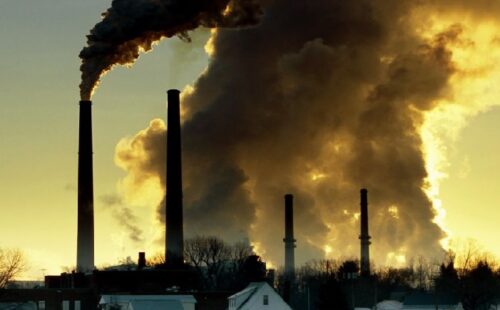
The condition produced due to ‘substances put into air by the activity of mankind into concentration sufficient to cause harmful effects to his health, vegetables, property or to interfere with the enjoyment of his property’ is called as air pollution or the atmospheric pollution
Ladybird is one uncommon compound word made by the union of two simple common words – Lady and Bird. But,…
Environment may be defined as ‘Complete range of various sets of external conditions comprising- physical, biological, and for human beings- cultural, economic and political conditions; in which human beings and other life forms exist in continuous interactions among themselves.
Everyone wishes to increase his body immunity in the current fearful period of corona. Earlier, very few talked about immunity and no- one probably ever talked to make efforts for increasing it.
Ecosystems can be categorised into two broad categories: natural and artificial. Natural Ecosystems are those ecosystems that operate by themselves under natural conditions. These ecosystems are further categorized as Terrestrial and Aquatic Ecosystems. Terrestrial ecosystems relate to lands, whereas Aquatic ecosystems relate to fresh or marine water. Freshwater ecosystems may be Lotic or Lentic. Lotic are running water ecosystems like springs, streams or rivers, whereas Lentic Fresh Water Ecosystems may be found in standing waters of lakes, ponds, pools, puddles, ditches, swamps, etc. Marine Ecosystems are found in marine waters of salt lakes, seas, oceans and estuaries. Artificial Ecosystems are man-engineered ecosystems like crop fields, artificial ponds and lakes, aquaria, fish ponds, and abandoned mines reclaimed as lakes or water bodies for recreation.
We rear and take care of animals to take their support in food production. Their systematic and proper rearing and also the arrangement for their proper reproduction and management are called as Animal Husbandry.