
United Nations System
On June 26, 1945 fifty-one; nations representing 80% of the world’s population approved and signed a charter for the establishment of a world body of nations – the United Nations Organisation (UNO); at San Francisco.
On June 26, 1945 fifty-one; nations representing 80% of the world’s population approved and signed a charter for the establishment of a world body of nations – the United Nations Organisation (UNO); at San Francisco.
The Chief Justice of Jharkhand High Court Dr. Ravi Ranjan and Justice S.N.Prasad heard on the PIL demanding encroachment free conservation of Ranchi’s Bara Talab (so called Ranchi Lake) and other water sources on Thursday i.e. on 8th April, 2021.
Biodiversity sources and also other sources supply raw materials to many important industries.
They have aesthetic value and an appeal for ecotourism, which supports the growth of the national economy. They are also potential sources of pharmaceuticals, other chemicals, agricultural materials, etc.
Pharmaceutical products of biodiversity origin offer important medicines to our healthcare systems and prepare a background for many social services. Besides these, biodiversity offers various ecosystem services as each of the numerous species of animals and plants depends on other animals or plants for survival, breeding, and development.
There are many different types of technologies or technological models- such as Low-tech, Hi-tech, alternative, intermediate, appropriate, blended, hard, and soft technologies.
A population is a group of individuals (all members of a single species) who live together in the same habitat and are likely to interbreed. Each population has a unique physical distribution in time and space. It may contain individuals of different ages, and its size (density) is likely to change over time. It grows or shrinks according to the reproductive success of its members.
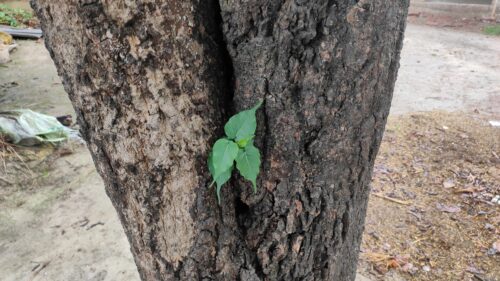
Both the banyan and tamarind trees have large canopy and plenty of leaves. These produce lots of oxygen and absorb lots of carbon dioxide. Thus, besides numerous other benefits they keep up the balance of environment.
Varieties of Biological Resources are in international demand today. To meet this international demand, illegal smuggling of these resources is done through illegal routes. Some species of plants and animals have been threatened, rare, endangered or critically endangered due to such practices. Several valuable species of plants and animals have become extinct due to these activities. The international trade in animal body parts is increasing rather rapidly due to their high prices in the international markets. Where possible, the trade of whole animals is also in full swing.
We rear and take care of animals to take their support in food production. Their systematic and proper rearing and also the arrangement for their proper reproduction and management are called as Animal Husbandry.
Ecological Niche Dictionary defines the term Niche as a comfortable or suitable position in the life of a living being or a role taken by a type of organism within its community. In other words, an ecological niche is the role and position a species has in its environment, for example, how it meets its food and shelter needs, survives, and reproduces. A species’ niche includes all of its interactions with its environment’s biotic and abiotic factors.
Both pomegranate and mango are nutritios fruits. These help us in keeping good health.
Different activities may generate waste which may be solid or liquid. The quality of both solid and liquid wastes is increasing and if the wastes are disposed in an uncontrolled manner these may cause adverse impact on public health and environment. Hence these wastes need to be managed efficiently so as to safeguard public health and environment. In definitional terms, solid and liquid waste management is the collection, transportation, processing, recycling, treatment and disposal of waste materials.
The biosphere is itself a vast ecosystem which incorporates all the small ecosystems. But, the biosphere may have different types of physical conditions, communities of plants and animals, and climatic conditions in its different zones.