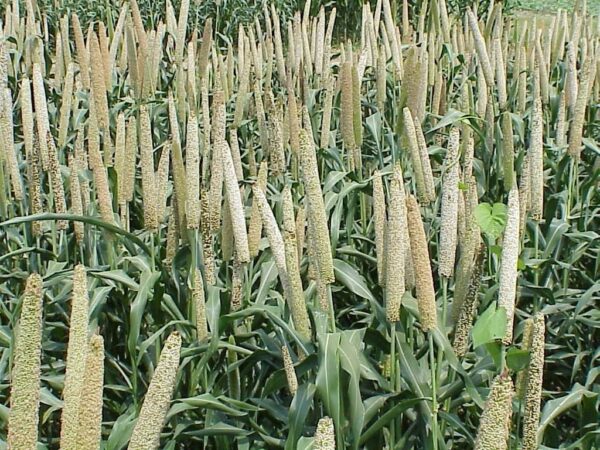
Eat Breads of Pearl Millets to Enhance Immunity
The bread of maize and vegetable of mustard leaves during winter are popular food items. Their popularity originates basically from the Punjab state of India.


The bread of maize and vegetable of mustard leaves during winter are popular food items. Their popularity originates basically from the Punjab state of India.
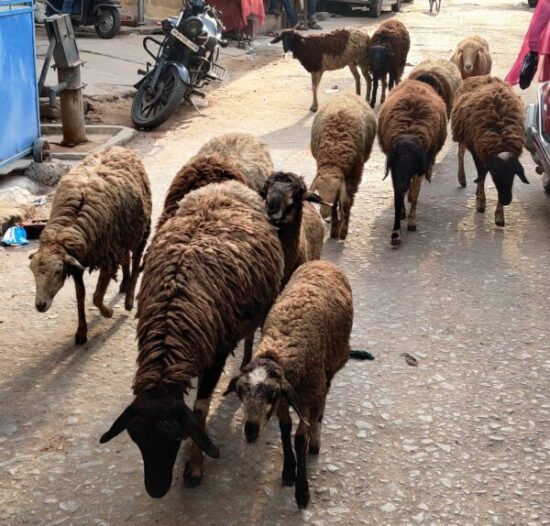
We rear and take care of animals to take their support in food production. Their systematic and proper rearing and also the arrangement for their proper reproduction and management are called as Animal Husbandry.
The balloon vine is an interesting plant of India which is also called as Love in a Puff, the heart pea, the heart seed etc. Botanically, it is called as Cardiospermum halicacabum .This plant belongs to the taxonomic family Sapindaceae or the Soapberry family.
Proper arrangement of resources and techniques to check losses to crops through different factors is called as Crop Protection Management.
The resources that provide food to living organisms are called as food resources.
Working time is the time when a person remains busy in doing some work. It may be the part of his daily routine when he has to do something either assigned by an organisation or by his own plan of work.
The term animal has its origin from the Latin word animalis which means one who has breath. This word is usually applied for the non-human members of the Kingdom Animalia in animal taxonomy.
The biosphere is itself a vast ecosystem which incorporates all the small ecosystems. But, the biosphere may have different types of physical conditions, communities of plants and animals, and climatic conditions in its different zones.
Animals can be categorized mainly into two categories- domestic, and wild. However, the domestic animals that live under wild conditions are called Feral Animals.
The bio-mechanical process of exchange of gases between an individual and his atmosphere is called as breathing.
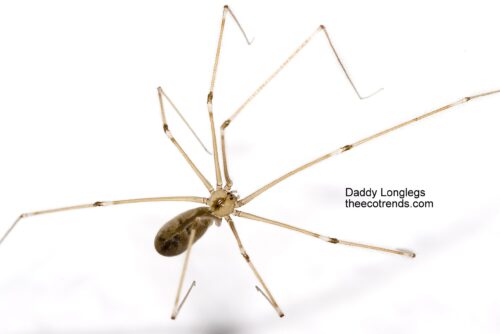
Well, Daddy Longlegs or the Grandfather Grey Beard is a Cellar Spider named as Pholcus taxonomically. It is a member of the family Pholcidae (C.L.Koch, 1850). It is an Aranchomorph spider that comes under the phylum Arthropoda.
Ozone absorbs ultraviolet radiations so that much of it is never allowed to reach to the earth surface. The protective umbrella of ozone layer in the stratosphere protects the earth from harmful ultraviolet radiations. Ozone plays an important role in the biology and climatology on the earth’s environment. It filters out all the radiations that remain below 3000Å. Radiations below this wavelength are biologically harmful. Hence any depletion of ozone layer is sure to exert catastrophic impacts on life in the biosphere.