Responsibilities of industries for Environment
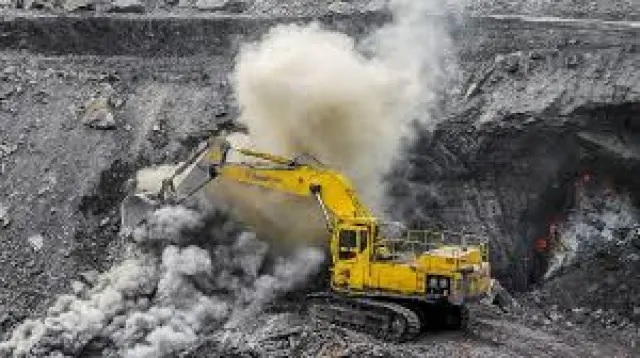
New Technologies are developed for improving and increasing industrial production. Similarly, new projects are formulated for providing energy to those…
New Technologies are developed for improving and increasing industrial production. Similarly, new projects are formulated for providing energy to those…
Varieties of Biological Resources are in international demand today. To meet this international demand, illegal smuggling of these resources is done through illegal routes. Some species of plants and animals have been threatened, rare, endangered or critically endangered due to such practices. Several valuable species of plants and animals have become extinct due to these activities. The international trade in animal body parts is increasing rather rapidly due to their high prices in the international markets. Where possible, the trade of whole animals is also in full swing.
The development in all sectors of a country is essential to feed its growing numbers and to feed and to…
The gap between the rich and the poor has increased due to population growth. The rich people are exploiting more resources than poor people. Malnutrition is one of the most common effects of these problems. The poorest people in developing countries do not get adequate calories to develop their health properly.
Flowers are most beautiful and attractive parts of a plant. These contain reproductive structures- male and female. Flowers containing any one of these structures are known as unisexual whereas flowers containing both the reproductive structures are known as bisexual.
Salai tree or the Boswellia is the tree of economic and medicinal importance.
Book Review S. CHAND’S ENVIRONMENTAL EDUCATION CLASS XI BY DR. M. P. MISHRA PURPOSE OF THE BOOK This book on…
Ozone absorbs ultraviolet radiations so that much of it is never allowed to reach to the earth surface. The protective umbrella of ozone layer in the stratosphere protects the earth from harmful ultraviolet radiations. Ozone plays an important role in the biology and climatology on the earth’s environment. It filters out all the radiations that remain below 3000Å. Radiations below this wavelength are biologically harmful. Hence any depletion of ozone layer is sure to exert catastrophic impacts on life in the biosphere.
Non-renewable resources coal and petroleum are energy sources that we use and consume faster than the rate of their production in nature.
Interdependence between two species through which individuals of either one or both species benefit is called positive interdependence. The benefits to the individual of any species through this relationship may be continuous or transitory, obligate or facultative. Both partners in this type of relationship may be in close contact; one may be inside some specific area or attached to the surface of the other’s body. Positive interdependence is divided into three major types: mutualism, Commensalism, and proto-cooperation.
Some propagules or seeds incidentally travel long distances and reach to other county. There they germinate and produce new plants.