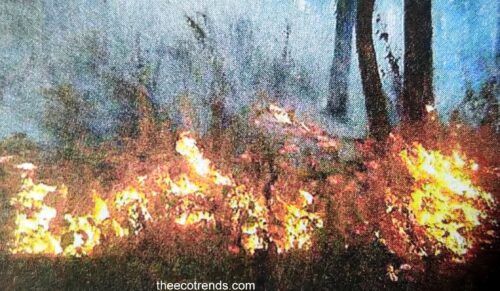
Forest – Fires in Uttarakhand and Himachal
Since October 1st to November 9th, a total of 92 incidents of forest-fires have been recorded that have burnt about 133.55 ha of forest in Uttarakhand.
Since October 1st to November 9th, a total of 92 incidents of forest-fires have been recorded that have burnt about 133.55 ha of forest in Uttarakhand.
Earlier women had to do most of the work in household. But, the trend is changing now. Both men and women have to do all the work now. The Inequality at the work place is vanishing now.
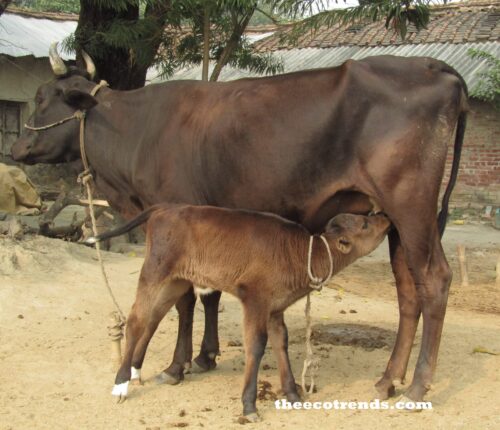
Animals could be mainly divided into wild and domestic. However, the domestic animals that live under wild conditions are called Feral Animals. It is not very difficult to understand a domestic animal from a wild animal, by looking at them, as there are many differences exhibited between them.
Some environmentalists define land pollution as – build up of toxic chemical compounds, salts, pathogens or radioactive materials in soil that can affect plant and animal life adversely, is called as soil pollution.
Biodiversity sources and also other sources supply raw materials to many important industries.
They have aesthetic value and an appeal for ecotourism, which supports the growth of the national economy. They are also potential sources of pharmaceuticals, other chemicals, agricultural materials, etc.
Pharmaceutical products of biodiversity origin offer important medicines to our healthcare systems and prepare a background for many social services. Besides these, biodiversity offers various ecosystem services as each of the numerous species of animals and plants depends on other animals or plants for survival, breeding, and development.
Conservation of species in their natural habitats- in areas where they occur under normal conditions is called in-situ conservation.
This type of conservation strategy protects the entire area. Such an area is protected and maintained to conserve all the known or unknown species inhabiting it.
In this type of conservation, species are not isolated or provided with health care, food, or mating facilities. Only factors detrimental to species’ existence and development are eliminated in this conservation strategy. Human interference, such as hunting, cutting down trees, collecting firewood, etc., is completely banned in such areas.
More than half of the population of the world comprises farmers. These farmers know that maintenance and conservation of natural resources are very important to sustain their livelihoods. However, the demand of more and more food due to exploding population and higher expectations for comfort and wealth forces these farmers to exploit more and more of the natural resources through the application of modern technology.
1. Trait-A exists in 10% of a population of an asexually reproducing species and trait-B in 60%of the same population….
Jordanov was a famous Italian philosopher, astronomer, mathematician and poet of 16th century. He was born in Shola, Italy in 1548.
Living beings in environment like animals and plants constitute more than half of the environment in the biosphere. All of these need to be conserved.
Dayan system is a traditional bad practice and superstition in Jharkhand. If we compare this system with other states we see that it is graver in Jharkhand. In this state more than 1231 women are declared as Dayan per year. After being declared as Dayan these women are differently tortured and pained sometimes up to death.