Woo Back Lovely Sparrows to Our Homes
Sparrow or the House Sparrow taxonomically belongs to the family Passeridae. It is found in most parts of the world.
Sparrow or the House Sparrow taxonomically belongs to the family Passeridae. It is found in most parts of the world.
The resources that provide food to living organisms are called as food resources.
Deforestation contributes up to 20 percent of greenhouse gas emission which is more than the combined emission by all the cars, trucks, planes, boats and, trains of the world. Deforestation threatens our climate. Besides this, it threatens the livelihoods of 1.6 billion people who depend on forests for food and economic activities. They serve as habitats to rare and so far, undiscovered species of plants and animals. They also play a key role in maintaining water cycles and preventing floods and soil erosion. Hence, forests across the world need urgent measure of protection by all possible ways, may it be through alternatives to deforestation.
Sometimes it so happens that serious and abrupt changes in weather condition ruin the entire crop. Thus, the hard work of the whole season goes in vain. What about the debt which he has to pay? On the other hand, market prices of his agriculture production often remain too less to support the economy of the farmer. These are the conditions under which a number of farmers in different states of India have been reported committed suicides.
The term animal has its origin from the Latin word animalis which means one who has breath. This word is usually applied for the non-human members of the Kingdom Animalia in animal taxonomy.
According to the World Health Organisation (WHO) – Nutrition is the intake of food, considered in relation to the body’s dietary needs.
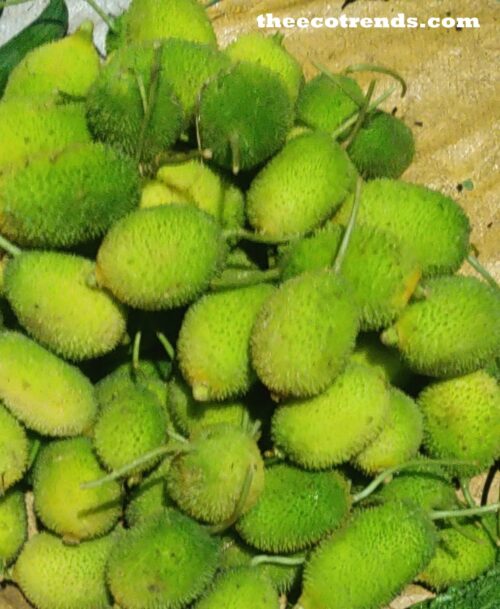
Kheksa is taxonomically known as Momordica dioica. It is commonly known as Kheksa, Spiny gourd, bristly Balsam pear, and Prickly carolaho, Kantola etc. It belongs to the family Cucurbitaceae.
Respiration is different in aquatic and terrestrial animals. Aquatic animals repire by means of gills and skin while terrestrial animals breathe in through lungs.
Land management is the process of managing the use and development of land resources in rural and urban areas.
Environment may be defined as ‘Complete range of various sets of external conditions comprising- physical, biological, and for human beings- cultural, economic and political conditions; in which human beings and other life forms exist in continuous interactions among themselves.
There are four basic factors that cause population change in a country – Natality or the birth rate, Mortality or…