Industrialization

Advertisement
August 4, 2020

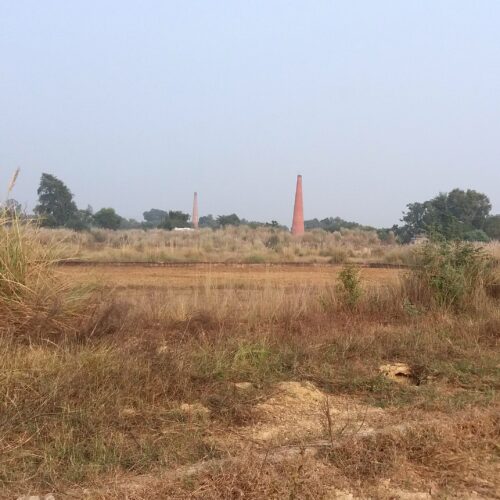
Bringing Our Farmers Back to the Land in India

Due to less paying agriculture farmers migrated to cities. The volume of migration was seen during the lock down period when farmers left cites for remigation. Remigrated farmers can be checked to their fields by improving pricing and free maket system to farmers.

Read Article
May 15, 2022 Recommended

Amazing world of animals

 The term animal has its origin from the Latin word animalis which means one who has breath. This word is usually applied for the non-human members of the Kingdom Animalia in animal taxonomy. However, the closer relatives of humans like mammals (having mammary glands) have been included in this term.

Read Article
November 24, 2020 Recommended

The Story of Daddy Longlegs

Well, Daddy Longlegs or the Grandfather Grey Beard is a Cellar Spider named as Pholcus taxonomically. It is a member of the family Pholcidae (C.L.Koch, 1850). It is an Aranchomorph spider that comes under the phylum Arthropoda.

Read Article
May 21, 2022 Recommended

Plants and their Different Parts

Living organisms capable of synthesizing food on their own are called as plants. They contain chlorophyll, the green magnesium compound which helps in trapping the energy from sun. This energy runs the process of photosynthesis through which glucose is basically synthesized in leaves and green stems on combining together the atmospheric carbon dioxide and water.

Read Article
January 3, 2025 Recommended

Adoption of Zero Deforestation Policies by corporations and markets

It is said that corporations can destroy the world’s intact forests. They have also the Power to help save them. They can make an impact by introducing zero- deforestation policies. These policies require suppliers to produce commodities such as timber, beef, palm oil, and fibres for paper in such a way that has a minimal impact on natural forests and climate. These can also introduce paper procurement policies that set ambitious targets to maximise the use of post-consumer recycled wood, pulp, paper and fibre in their products and ensure that any virgin fibre used is certified by a rigorous third-party certification system.

Read Article
September 3, 2024 Recommended

What is Ecosystem? What are its components?

The environment of our earth has a number of life zones that support birth and development of all types of organisms.

All the life zones of the earth are collectively called as Biosphere.

The biosphere vertically extends into the atmosphere up to about 10 km and downwards into the oceans up to a depth of about6.9 km.

Read Article
September 1, 2022 Recommended

Cooking and Fuels

The process of preparing food for consumption with the use of heat is called as cooking. The art and science of cooking is called as cookery.

Read Article
October 15, 2022 Recommended

How to manage our Natural Resources

Human activities have never been friendly to environment. The remains of Mohenjo-Daro and Harappa signify that the civilization ended due to desertification which might had been caused by large scale deforestation. Still today impacts of such human activities have started appearing. Hence it is essential that we manage our natural resources properly.

Read Article
September 30, 2024 Recommended

Positive and Negative Interdependence among Organisms in Ecosystems

Interdependence between two species through which individuals of either one or both species benefit is called positive interdependence. The benefits to the individual of any species through this relationship may be continuous or transitory, obligate or facultative. Both partners in this type of relationship may be in close contact; one may be inside some specific area or attached to the surface of the other’s body. Positive interdependence is divided into three major types: mutualism, Commensalism, and proto-cooperation.

Read Article
December 18, 2023 Recommended

Dynamics of Population

A population is a group of individuals (all members of a single species) who live together in the same habitat and are likely to interbreed. Each population has a unique physical distribution in time and space.  It may contain individuals of different ages, and its size (density) is likely to change over time. It grows or shrinks according to the reproductive success of its members.

Read Article
Advertisement
Gallery Picture
Gallery Picture
Gallery Picture
Gallery Picture
Gallery Picture
Gallery Picture
Gallery Picture
Gallery Picture
Gallery Picture
Gallery Picture
Gallery Picture
Gallery Picture
Gallery Picture
Gallery Picture
Gallery Picture
Gallery Picture
Gallery Picture
Gallery Picture
Gallery Picture
Gallery Picture
Gallery Picture