Joint forest management

Advertisement
December 25, 2024

Joint Forest Management (JFM) and National Scenario

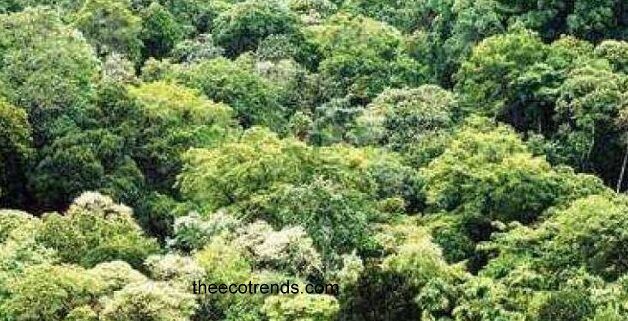
The concept of joint forest management was initiated on a large scale through guidelines issued by the government of India in 1990. According to those guidelines the village communities are to be involved in the development and protection of degraded forests based on taking their genuine share of benefits from those forests.
Read Article
December 19, 2021 Recommended

Our Environment and its Components

Man is surrounded by various life forms, forces and conditions- both physical and biological. Sunlight, land, air and water form physical conditions whereas all the plants, animals, and microorganisms form biological conditions.

Read Article
September 25, 2022 Recommended

Water Pollution- Sources and Control

Mixing of different solid, liquid or gaseous substances and microorganisms into water, so as to alter its natural qualities is called as water pollution. According to the National Water Commission (1973), water gets polluted if it has not been of sufficiently high quality to be suitable for the highest uses people wish to make of it at present or in future.

Read Article
April 24, 2021 Recommended

Basic Concepts of Nutrition

According to the World Health Organisation (WHO) – Nutrition is the intake of food, considered in relation to the body’s dietary needs.

Read Article
October 21, 2021 Recommended

National Reptiles’ Awareness Day 2021

There are more than 10,000 species of reptiles. This day helps us understand vast types of their species and their habitats. This day also provides us knowledge about benefits that we get from the world of reptiles.

Read Article
November 1, 2024 Recommended

Conservation of Wildlife   

Conservation of species in their natural habitats- in areas where they occur under normal conditions is called in-situ conservation.

This type of conservation strategy protects the entire area. Such an area is protected and maintained to conserve all the known or unknown species inhabiting it.

In this type of conservation, species are not isolated or provided with health care, food, or mating facilities. Only factors detrimental to species’ existence and development are eliminated in this conservation strategy. Human interference, such as hunting, cutting down trees, collecting firewood, etc., is completely banned in such areas.

Read Article
Advertisement
Gallery Picture
Gallery Picture
Gallery Picture
Gallery Picture
Gallery Picture
Gallery Picture
Gallery Picture
Gallery Picture
Gallery Picture
Gallery Picture
Gallery Picture
Gallery Picture
Gallery Picture
Gallery Picture
Gallery Picture
Gallery Picture
Gallery Picture
Gallery Picture
Gallery Picture
Gallery Picture
Gallery Picture