
Waste Management Technology in India Principles and Guidelines
Following principles and guidelines have been accepted for the control of different types of pollution- A. Prevention of entry into…
Following principles and guidelines have been accepted for the control of different types of pollution- A. Prevention of entry into…
Integrated Pest Management (IPM) in India: Features, Benefits, and Sustainable Agriculture Practices The promotion of Integrated Pest Management (IPM) in…
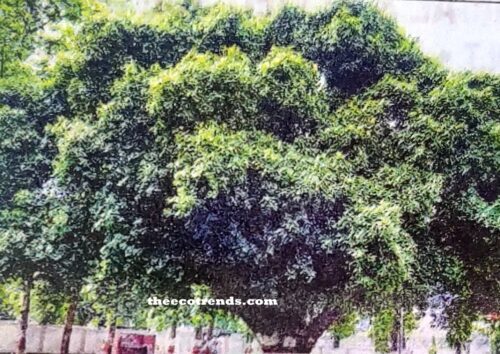
Both the banyan and tamarind trees have large canopy and plenty of leaves. These produce lots of oxygen and absorb lots of carbon dioxide. Thus, besides numerous other benefits they keep up the balance of environment.
Deforestation contributes up to 20 percent of greenhouse gas emission which is more than the combined emission by all the cars, trucks, planes, boats and, trains of the world. Deforestation threatens our climate. Besides this, it threatens the livelihoods of 1.6 billion people who depend on forests for food and economic activities. They serve as habitats to rare and so far, undiscovered species of plants and animals. They also play a key role in maintaining water cycles and preventing floods and soil erosion. Hence, forests across the world need urgent measure of protection by all possible ways, may it be through alternatives to deforestation.
Pakad or Ficus virens is one significant tree of the Panchvati group. Panchvati is the group of five sacred or important trees worshipped and adorned in the Hindu culture since ancient time.
In the early stages of COVID-19, when the world was in terror, and no way of treatment was seen, the public of India depended on the traditional systems of healthcare.
The organic matter formed through degradation of decomposable biomass and which is rich in nutrients for the growth and development of plants is called as compost.
Natural resources constitute both living and non-living resources. Non-living resources are renewable and non-renewable.
Man is surrounded by various life forms, forces and conditions- both physical and biological. Sunlight, land, air and water form physical conditions whereas all the plants, animals, and microorganisms form biological conditions.
The conditions of a habitat remain changing abruptly and periodically. Abrupt changes in environment often do not give time to an organism to get ready and to face the challenges. As such the organism can survive only when it has sufficient abilities to tolerate these changes.
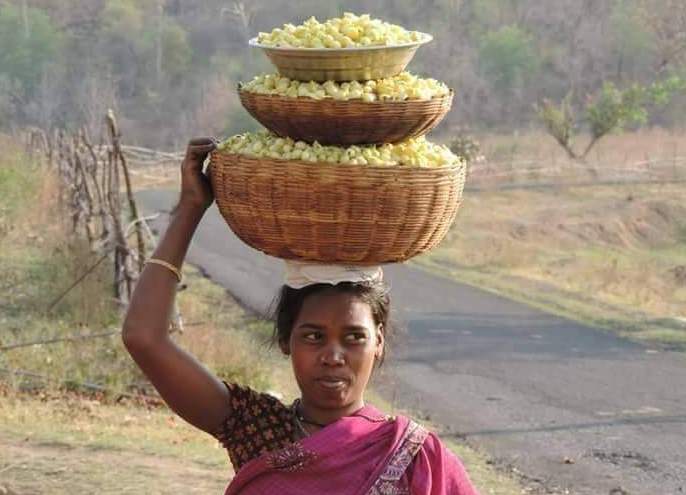
Mahaua or the Madhuca longifolia is indigenous to India. It is a good sized tree and it grows up to 20 meters in height.
The predominant features that create structural complexity in the environment, such as plants or animals are called as a habitat.
A process, in which natural habitat is rendered functionally unable to support the plants and animals occupying it, is named as Habitat destruction. In the process of habitat destruction, plants and animals that previously used the place are displaced or destroyed, reducing biodiversity.