
Amazing world of animals- II
Animals are of different types and varieties. The world of animals is most amazing
Interdependence between two species through which individuals of either one or both species benefit is called positive interdependence. The benefits to the individual of any species through this relationship may be continuous or transitory, obligate or facultative. Both partners in this type of relationship may be in close contact; one may be inside some specific area or attached to the surface of the other’s body. Positive interdependence is divided into three major types: mutualism, Commensalism, and proto-cooperation.
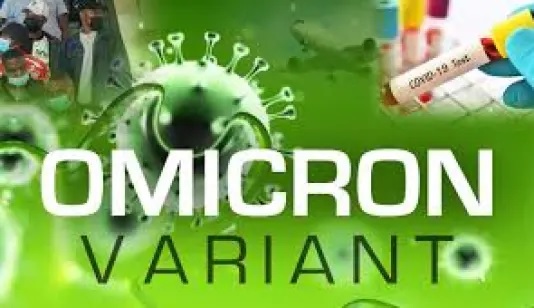
The whole world is worried due to the new variant of corona Omicron. The era of lockdowns has again started because Omicron is seen as more deadly variant. WHO has declared that it disseminates faster and is more dangerous. Everyone has been warned to strengthen securities.
A substance, factor, change, living being or a system that quantifies and simplifies phenomena and helps in understanding complex realities,…
Great diversities are found in terms of sexual reproduction among animals.
The biosphere is itself a vast ecosystem which incorporates all the small ecosystems. But, the biosphere may have different types of physical conditions, communities of plants and animals, and climatic conditions in its different zones.
Parental traits are transferred from one generation to other generation by means of chromosomes, DNA, or Genes.
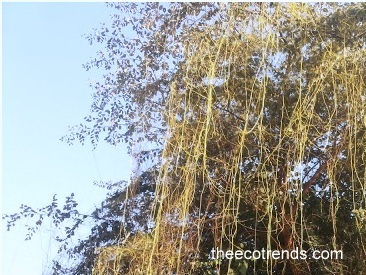
Cuscuta is found throughout the temperate and tropical regions of the world. It has great species diversity in subtropical and tropical regions of the world. It has many folk names like wizard net, devil’s hair, goldthread, hair weed, love wine; strangle weed, angel’s hair, and witch’s hair.
Control and Coordination in animals are performed by the activities of different types of chemical substances. These chemical substances are known as Animal Hormones.
Natural beehives are naturally occurring structures occupied by honeybee colonies, such as hollowed-out trees, while domesticated honeybees live in man-made beehives, known as Apiary.
An act was passed on December 18 in the year 2006 in order to safeguard the forest rights of traditional forest dwellers in India. This act is called as the Scheduled Tribe and Other Traditional Forest Dwellers (Recognition of Forest Rights) Act, 2006.
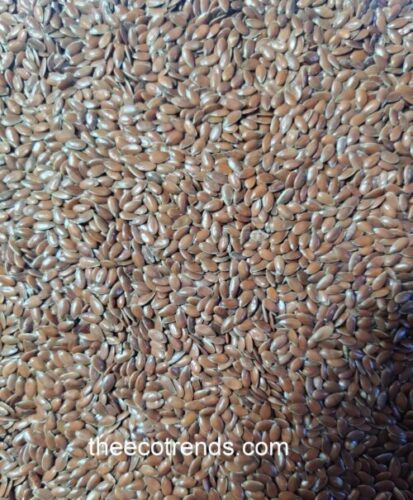
In irrigated conditions 80 kg of Nitrogenous fertilizers, 30 kg of Phosphorus, 20 kg of Potassium and 20 kg of Sulphur fertilizers are recommended in one hectare of land for the linseed cultivation.