tidal energy

Advertisement
August 20, 2022

Energy from Oceans- Tidal Energy, Wave Energy and Oceanic Thermal Energy

Ocean is a vast natural resource of water. These have also been examined in the search for alternate sources of energy-generation. For example, gravitational pull, by sun and moon causes tides, in which sea level rises and falls, two times in 24 hours. When it rises, sea water may be diverted through suitable channels, to inshore reservoirs driving the turbines, during its entry.

Read Article
September 3, 2022 Recommended

Need for Living Together and Neighbourhood

Human beings needed to live together to have a family and to rear and develop children. They lived together for social security and social strength. Thus, human settlements were formed.
Neighbourhood is a geographically localized community within an area, may it be a rural area, a town or a city, or sub-urban.

Read Article
September 6, 2022 Recommended

Neighbourhood- Mapping and Representation

Neighbourhood is a geographically localized community within an area, may it be a rural area, a town or a city, or sub-urban. Neighbourhood are considered as social communities in which face-to-face interaction among people take place.

Read Article
September 6, 2022 Recommended

Urban and Rural Waste: Methods of their Disposal

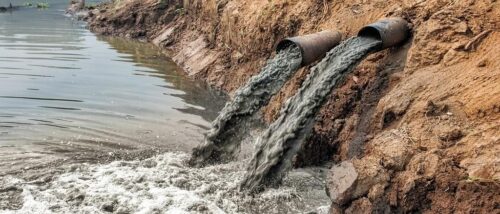
Different activities may generate waste which may be solid or liquid. The quality of both solid and liquid wastes is increasing and if the wastes are disposed in an uncontrolled manner these may cause adverse impact on public health and environment. Hence these wastes need to be managed efficiently so as to safeguard public health and environment.

Read Article
May 3, 2021 Recommended

How do Organisms get Their Food?

Mode of nutrition through which an organism depends on other organisms for food due to its inability to synthesise food is called as heterotrophic nutrition.

Read Article
August 12, 2022 Recommended

Components and sources of food

The food eaten by any one comprises many different components like – Carbohydrates, Proteins, fats, Minerals, and Vitamins and water. For humans and big animals water too has been accepted as a necessary component of food.

Read Article
July 28, 2021 Recommended

Different Plant- Movements

The positive movements of a plant shoot in response to light or movement of shoot towards the source of light is called as Phototropism. If the part of a plant moves away from light, this movement is called as Negative Phototropism.

Read Article
August 24, 2022 Recommended

Farmers and their conditions in India 

Sometimes it so happens that serious and abrupt changes in weather condition ruin the entire crop. Thus, the hard work of the whole season goes in vain. What about the debt which he has to pay? On the other hand, market prices of his agriculture production often remain too less to support the economy of the farmer. These are the conditions under which a number of farmers in different states of India have been reported committed suicides.

Read Article
December 1, 2020 Recommended

Our Food, Culture and Biodiversity

Thus, diversity of food is in fact the diversity of culture or at least you can say that cultural diversity of India is linked to its biodiversity. And so, the cultural diversity of the world is linked to its biodiversity. But often, we don’t get ready to accept it.

Read Article
January 14, 2022 Recommended

Human Activities and Environment

Waste too is found in three states- solids, liquids and gases. Liquid wastes such as different types of chemicals, useless medicines, detergents, pesticides, oil, automobile wastes etc. spread on the soil surface and make it poisoned. Decomposition and burning of things on ground produce different gases that pollute the air.

Read Article
August 28, 2024 Recommended

What is Ozone layer? How is it depleted and what are the control measures?

Ozone absorbs ultraviolet radiations so that much of it is never allowed to reach to the earth surface. The protective umbrella of ozone layer in the stratosphere protects the earth from harmful ultraviolet radiations. Ozone plays an important role in the biology and climatology on the earth’s environment. It filters out all the radiations that remain below 3000Å. Radiations below this wavelength are biologically harmful. Hence any depletion of ozone layer is sure to exert catastrophic impacts on life in the biosphere.

Read Article
Advertisement
Gallery Picture
Gallery Picture
Gallery Picture
Gallery Picture
Gallery Picture
Gallery Picture
Gallery Picture
Gallery Picture
Gallery Picture
Gallery Picture
Gallery Picture
Gallery Picture
Gallery Picture
Gallery Picture
Gallery Picture
Gallery Picture
Gallery Picture
Gallery Picture