Coarse Grain

Advertisement
January 12, 2023

The Year of Course Grains- 2023

Lots of discussion is going on about combining coarse grains in our food. The United Nations has decided to celebrate the year 2023 on international levels the year of course grains. It was initiated by the Prime Minister of India Mr. Narendra Modi.
Read Article
December 28, 2022

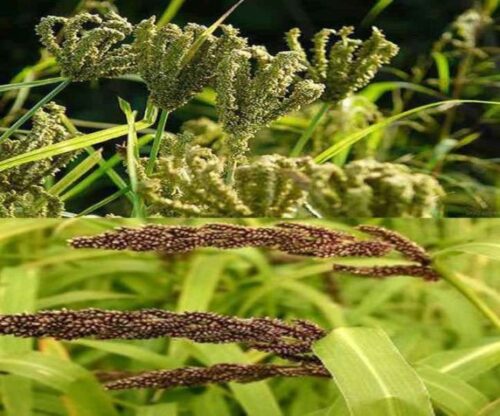
Madua, a very nutritive coarse grain crop

Madua or ragi or finger millet which falls under coarse grain is a very nutritive diet. The Indian Government has declared an integrated policy to encourage the use of coarse grain. Through it is clear that importance of coarse grain is about to rise in near future.

Read Article
March 23, 2023 Recommended

Landfilling and Incineration

Land-filling is the process of disposing solid waste in low lands or into trenches through proper sanitary methods. It involves- collection, transport, compaction, etc. processes along with proper management for gas-outlet etc. For land filling, the important thing to be taken into account is the distance of waste collection site to the waste dumping site, because it involves cost of transportation.

Read Article
August 28, 2024 Recommended

What is Ozone layer? How is it depleted and what are the control measures?

Ozone absorbs ultraviolet radiations so that much of it is never allowed to reach to the earth surface. The protective umbrella of ozone layer in the stratosphere protects the earth from harmful ultraviolet radiations. Ozone plays an important role in the biology and climatology on the earth’s environment. It filters out all the radiations that remain below 3000Å. Radiations below this wavelength are biologically harmful. Hence any depletion of ozone layer is sure to exert catastrophic impacts on life in the biosphere.

Read Article
November 28, 2020 Recommended

Burning of Those Dry Fallen Leaves of Trees

It is reported that about 30 million tones of dry leaves are dumped into landfills every year in America. In India most of these leaves are either burnt on the floor where they fall or collected by poor people and stored for burning during winter season to generate heat.

Read Article
January 1, 2025 Recommended

Various Important Alternatives to Deforestation

Deforestation contributes up to 20 percent of greenhouse gas emission which is more than the combined emission by all the cars, trucks, planes, boats and, trains of the world. Deforestation threatens our climate. Besides this, it threatens the livelihoods of 1.6 billion people who depend on forests for food and economic activities. They serve as habitats to rare and so far, undiscovered species of plants and animals. They also play a key role in maintaining water cycles and preventing floods and soil erosion. Hence, forests across the world need urgent measure of protection by all possible ways, may it be through alternatives to deforestation.

Read Article
August 14, 2022 Recommended

All about wind energy

The Wind is Air in Motion. It is caused by differential heating of land, water, hills and mountain slopes by sun rays. About 25 % (i.e., 0.34 KW/m2) of incident solar radiation is dissipated as wind energy. There is kinetic energy in wind.

Read Article
September 19, 2024 Recommended

What is an Ecological Niche? How is it related to habitat?

Ecological Niche Dictionary defines the term Niche as a comfortable or suitable position in the life of a living being or a role taken by a type of organism within its community. In other words, an ecological niche is the role and position a species has in its environment, for example, how it meets its food and shelter needs, survives, and reproduces. A species’ niche includes all of its interactions with its environment’s biotic and abiotic factors.

Read Article
February 16, 2022 Recommended

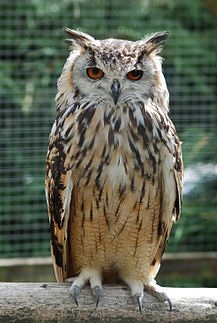
Birds

Birds evolved from reptiles during the mesozoic era.

Read Article
April 11, 2023 Recommended

Overpopulation and its impact

A group of individuals of a particular species occupying a particular area at specific time is called as population. A species is a group of similar type of organisms that can interbreed under natural conditions. The interbreeding organisms of a species produce new organisms and finally result into the growth of population. This is true for all the life forms including human beings.

Read Article
Advertisement
Gallery Picture
Gallery Picture
Gallery Picture
Gallery Picture
Gallery Picture
Gallery Picture
Gallery Picture
Gallery Picture
Gallery Picture
Gallery Picture
Gallery Picture
Gallery Picture
Gallery Picture
Gallery Picture
Gallery Picture
Gallery Picture
Gallery Picture
Gallery Picture