
Sexual Reproduction in Plants
Sex organs of plants are found inside flowers. A male reproductive organ is called as Androecium and a female sex organ is called as Gynoecium.
Sex organs of plants are found inside flowers. A male reproductive organ is called as Androecium and a female sex organ is called as Gynoecium.
In human beings reproduction takes place through the activities of male and female reproductive organs. To understand this, it is essential to study the structure of male and female reproductive systems separately.
1. Trait-A exists in 10% of a population of an asexually reproducing species and trait-B in 60%of the same population….
Most animals of the same kind have same body parts. But their body parts differ in size, shape, colour and functions.
A Hybrid Green House dryer has been developed by Manoj Gaur, a professor at the department of Mechanical Engineering, Madhav Institute of Technology and Sciences Gwalior.
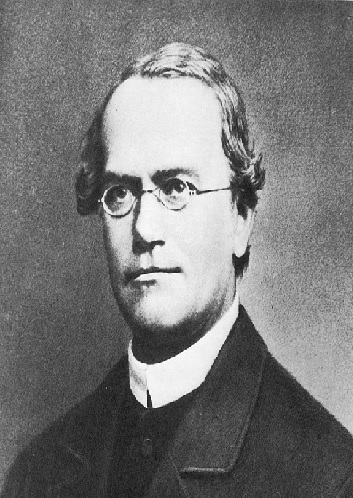
On the basis of his experiments of hybridization Mendel proposed following rules of heredity-1. Law of dominance, 2. Law of iseggregation and , 3.Law of Independent Assortment.
An incident of invasion by a living species into entirely new habitat thereby threatening the existence of native species is called as bioinvasion or Biological Invasion.
Land management is the process of managing the use and development of land resources in rural and urban areas.
In a human being the ingestion of food is brought about in mouth where it is crushed into fine pieces by teeth.
Dayan system is a traditional bad practice and superstition in Jharkhand. If we compare this system with other states we see that it is graver in Jharkhand. In this state more than 1231 women are declared as Dayan per year. After being declared as Dayan these women are differently tortured and pained sometimes up to death.
In the new strategy of the Forest Management, local public is allowed to be involved in conservation and management of forests with the government. This strategy is called as Integrated Forest Conservation and Management.
When both the ovaries are fully mature, they alternatively produce ova at the interval of 28 days. Release of ovum into the uterus through the fallopian tube is called as ovulation.