poultry

Advertisement
August 22, 2022

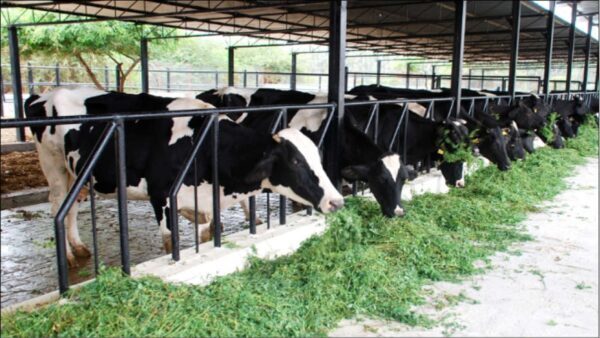
Food Production from Animals

The government have initiated a number of measures to increase the productivity of milch animals. It has resulted in an increase in the milk production significantly from the level of 102.6 million tonnes at the end of the tenth plan (2006 -2007) to 127.9 million tonnes at the end of the Eleventh plan (2011 -2012. The Annual Growth Rate of milk production was about 5% in 2011 -12 compared to 2010 -11.
Read Article
October 28, 2024 Recommended

Direct causes of the loss of biodiversity

Species become endangered due to both natural and anthropogenic causes. Since man has no control over natural causes, we should consider anthropogenic causes only. Anthropological causes may be classified into two fundamental categories: Direct Causes and Indirect or underlying causes.

Read Article
September 9, 2022 Recommended

Habitat Destruction

Nearly half of the planet’s plant and animal species live in Rainforests. Less than 2.5 billion acres of Tropical Forest have remained out of four billion acres on the Earth within a few hundred years.

Read Article
May 31, 2021 Recommended

Herbs Mixed Jaggery prepared to cure diseases

Jaggery is a traditional sweet of India. After the appearance of sugar in Indian markets, its use was slowed down for some decades. But now it is being used in urban areas also. It is reported that jaggery contains many medicinal properties and it is full of nutrients.

Read Article
December 1, 2020 Recommended

Our Food, Culture and Biodiversity

Thus, diversity of food is in fact the diversity of culture or at least you can say that cultural diversity of India is linked to its biodiversity. And so, the cultural diversity of the world is linked to its biodiversity. But often, we don’t get ready to accept it.

Read Article
April 11, 2023 Recommended

Overpopulation and its impact

A group of individuals of a particular species occupying a particular area at specific time is called as population. A species is a group of similar type of organisms that can interbreed under natural conditions. The interbreeding organisms of a species produce new organisms and finally result into the growth of population. This is true for all the life forms including human beings.

Read Article
Advertisement
Gallery Picture
Gallery Picture
Gallery Picture
Gallery Picture
Gallery Picture
Gallery Picture
Gallery Picture
Gallery Picture
Gallery Picture
Gallery Picture
Gallery Picture
Gallery Picture
Gallery Picture
Gallery Picture
Gallery Picture
Gallery Picture
Gallery Picture
Gallery Picture
Gallery Picture
Gallery Picture
Gallery Picture