World Water Week 2020 – at Home
World Water Week Stockholm is celebrated every year from 23 to 28 Aug. every year. Due to pandemic covid-19 it is taking place from 24 to 28 Aug. this year with a theme- World Water Week at Home.
World Water Week Stockholm is celebrated every year from 23 to 28 Aug. every year. Due to pandemic covid-19 it is taking place from 24 to 28 Aug. this year with a theme- World Water Week at Home.
Ecosystems can be categorised into two broad categories: natural and artificial. Natural Ecosystems are those ecosystems that operate by themselves under natural conditions. These ecosystems are further categorized as Terrestrial and Aquatic Ecosystems. Terrestrial ecosystems relate to lands, whereas Aquatic ecosystems relate to fresh or marine water. Freshwater ecosystems may be Lotic or Lentic. Lotic are running water ecosystems like springs, streams or rivers, whereas Lentic Fresh Water Ecosystems may be found in standing waters of lakes, ponds, pools, puddles, ditches, swamps, etc. Marine Ecosystems are found in marine waters of salt lakes, seas, oceans and estuaries. Artificial Ecosystems are man-engineered ecosystems like crop fields, artificial ponds and lakes, aquaria, fish ponds, and abandoned mines reclaimed as lakes or water bodies for recreation.
Man has been keeping animals and depending on them for his livelihood since the origin of civilization. Washermen have been depending on donkeys since long for carrying clothes.
Introduction to Nuclear Family A nuclear family is a small family unit consisting of parents and their children. In modern…
Games are essential for physical and mental development of children.
Ozone absorbs ultraviolet radiations so that much of it is never allowed to reach to the earth surface. The protective umbrella of ozone layer in the stratosphere protects the earth from harmful ultraviolet radiations. Ozone plays an important role in the biology and climatology on the earth’s environment. It filters out all the radiations that remain below 3000Å. Radiations below this wavelength are biologically harmful. Hence any depletion of ozone layer is sure to exert catastrophic impacts on life in the biosphere.
The population explosions of earlier and present days have already caused and are still causing serious impacts on the global environment. As for the biological environment, the human population has stressed most biological systems, comprising flora and fauna, as well as biological diversity.
Water is the principal constituent of our body. Water is chemically an inorganic, transparent, tasteless, odourless, and colourless. It is the main constituent of the hydrosphere of the earth.
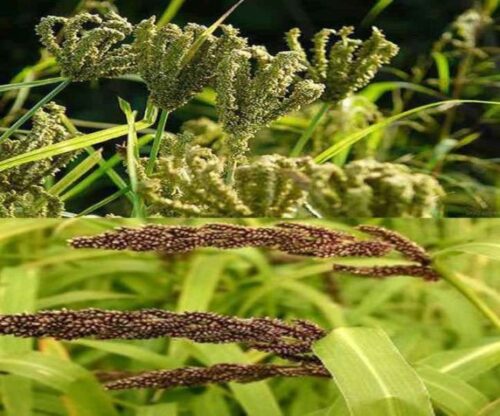
Madua or ragi or finger millet which falls under coarse grain is a very nutritive diet. The Indian Government has declared an integrated policy to encourage the use of coarse grain. Through it is clear that importance of coarse grain is about to rise in near future.
The gap between the rich and the poor has increased due to population growth. The rich people are exploiting more resources than poor people. Malnutrition is one of the most common effects of these problems. The poorest people in developing countries do not get adequate calories to develop their health properly.
Cauliflower is a beautiful compact snow ball like vegetable if it is white. It remains surrounded by soft and long foliage.
Brain and Spinal cord together constitute the Nervous System. The nervous system receives information in the form of impulses from all parts of the body and integrates this information.