
Relations among components of ecosystem and Food Chains
Green plants and trees that synthesize their own food are called as Autotrophs.Others who depend on them are called as Heterotrophs.
The dry weight of organic matter produced by plants, their derivatives and wastes are called as BIOMASS. The biomass includes crop residues, plant parts, body parts of dead animals and animal wastes. As biomass is created due to photosynthesis by plants, so energy from biomass or bio wastes is regarded as another form of solar energy.
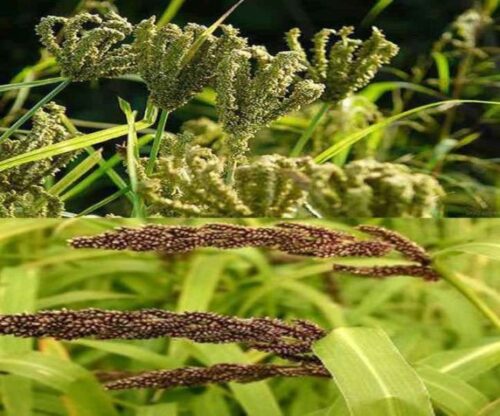
Madua or ragi or finger millet which falls under coarse grain is a very nutritive diet. The Indian Government has declared an integrated policy to encourage the use of coarse grain. Through it is clear that importance of coarse grain is about to rise in near future.
There are more than 10,000 species of reptiles. This day helps us understand vast types of their species and their habitats. This day also provides us knowledge about benefits that we get from the world of reptiles.
Our natural resources are known to have some specific qualities of their own. These qualities are known as natural qualities. It is due to specific natural qualities that different natural resources have been useful to us and to the whole biosphere. But now, the condition has changed considerably.
According to the Policy Document of Indian Agriculture Policy, Agriculture in India is a way of life, a tradition, which,…
Substances that cause pollution of air are called as air- pollutants or atmospheric pollutants. These are fine Primary Pollutants that contribute more than 90 percent of global air pollution. These fine pollutants are carbon monoxide (CO); Nitrogen oxides (NOx); Sulphur oxides (Sox) and particulates. These pollutants can be put into two broad categories A. Gaseous Pollutants, and B. Particulates.
The information received by a receptor at the end of a dendrite sets of a chemical reaction that creates an electric impulse.
The Conservation Status of Biodiversity is usually known through the comprehensive Inventory prepared periodically by the IUCN, the International Union for the Conservation of Nature and Natural Resources. This comprehensive Inventory of the Conservation Status of Species is popularly known as the Red List or the Red Data List.
Consumers too utilize some energy in their metabolic processes. Under these conditions some energy escapes away in the form of their body heat and some energy is wasted through excretory matter from their bodies. The rest of the energy goes into the atmosphere when top consumer dies and its body is decomposed.
Great diversities are found in terms of sexual reproduction among animals.
Integrated Pest Management (IPM) in India: Features, Benefits, and Sustainable Agriculture Practices The promotion of Integrated Pest Management (IPM) in…